Introduction
The integration of sensory tools into virtual therapy has become a critical component of modern occupational and physical interventions. This guide explains how weighted lap pads can support children during remote sessions, outlines the scientific rationale behind deep pressure stimulation, and provides actionable steps for therapists and parents. Readers will learn the underlying mechanisms, discover practical setup techniques, compare product options, and receive evidence‑based tips to maximize therapeutic benefit.
By the end of this article, one will be able to assess whether a weighted lap pad is appropriate for a specific child, select a model that aligns with therapeutic goals, and implement it safely within a virtual environment.
Background and Context
Weighted sensory products have been employed for decades in clinical settings to address sensory processing challenges. The principle of "deep pressure" originates from the vestibular and proprioceptive systems, which respond to sustained, evenly distributed force across the body. When applied correctly, this pressure can modulate the autonomic nervous system, leading to reduced cortisol levels and increased serotonin production, which together promote calmness and focus.
Virtual therapy presents unique obstacles, such as reduced physical presence, limited tactile feedback, and increased reliance on the home environment. Incorporating a weighted lap pad bridges this gap by providing a tangible, calming stimulus that the child can control independently.
Key terminology:
- Proprioception: The sense of body position and movement, essential for motor planning.
- Vestibular input: Information from the inner ear that helps maintain balance and spatial orientation.
- Deep pressure: A form of tactile input that is firm, consistent, and evenly distributed.
Understanding Weighted Lap Pads in Virtual Therapy
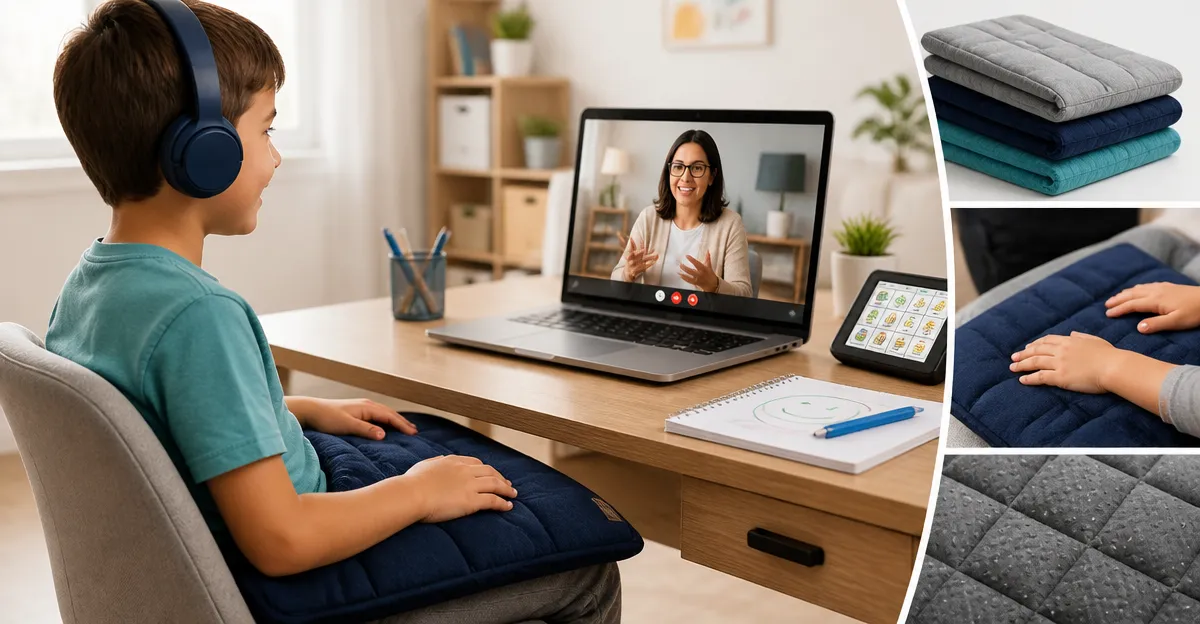
Weighted lap pads are portable, flat devices filled with hypoallergenic glass beads or similar materials. They are typically covered with soft fabrics such as Minky or cotton‑poly blends to ensure comfort during prolonged use. When placed on a child's lap, the pad exerts gentle pressure that can calm the nervous system, thereby improving attention and emotional regulation.
In a virtual session, the therapist can observe the child's posture, breathing, and engagement while the child uses the pad independently. The therapist may also guide the child through breathing exercises, visualizations, or fine‑motor activities that are enhanced by the pad’s stabilizing effect.
Research indicates that children with autism spectrum disorder, sensory processing disorder, or attention‑deficit/hyperactivity disorder often respond positively to weighted sensory input. The pad can be employed during:
- Homework or reading time to sustain concentration.
- Mindfulness or breathing exercises to deepen relaxation.
- Fine‑motor tasks such as drawing, writing, or manipulating small objects.
Product Recommendation: Kids Weighted Lap Pad
The Kids Weighted Lap Pad offers a balanced combination of therapeutic features and child‑friendly design. It weighs 5 lb, a weight that is generally recommended for children weighing between 40 lb and 80 lb, providing sufficient pressure without causing discomfort.
Key specifications extracted from the manufacturer include:
- Dimensions: 20 inches × 17 inches, allowing a secure fit on most laps.
- Material composition: Cotton‑poly blend exterior with a soft Minky inner layer.
- Filling: Hypoallergenic glass beads that distribute weight evenly.
- Interactive element: Reversible flip‑sequin fabric that encourages tactile exploration and fine‑motor skill development.
- Therapeutic endorsements: Recognised by occupational therapists for use in calming and focus‑enhancing activities.
Because the pad is lightweight yet substantial, it can be moved easily between rooms, making it suitable for home‑based virtual therapy. The reversible sequin surface adds an element of sensory play, allowing the child to engage in visual‑motor coordination while receiving deep pressure.
Comparison and Selection Guide
When choosing a weighted lap pad, one should evaluate the following criteria:
- Weight suitability: The pad should represent approximately 5‑10 % of the child’s body weight. A 5 lb pad is appropriate for children in the 40‑80 lb range.
- Size and coverage: Larger pads provide broader pressure distribution but may be cumbersome for smaller children.
- Cover material: Soft, breathable fabrics reduce skin irritation; Minky and cotton‑poly blends are common choices.
- Filling material: Glass beads offer uniform weight distribution; plastic pellets may shift and create uneven pressure.
- Additional sensory features: Elements such as sequins, textures, or pockets for small toys can increase engagement.
- Cleaning and maintenance: Removable, machine‑washable covers simplify hygiene, especially in shared environments.
Based on these factors, the Kids Weighted Lap Pad stands out for its:
- Appropriate weight for a wide age range.
- Durable, hypoallergenic construction.
- Dual‑sensory design that merges deep pressure with visual‑tactile stimulation.
Therapists who require a more adjustable weight option may consider pads with removable bead compartments, while parents seeking a single‑purpose calming tool might opt for a plain‑fabric pad without sequins.
Best Practices and Tips for Therapists and Parents
Implementing a weighted lap pad in virtual therapy demands clear communication and consistent routines. The following recommendations are derived from clinical experience:
- Pre‑session orientation: Before the first virtual visit, demonstrate how to position the pad, ensuring the child understands that the weight should feel firm but not painful.
- Safety check: Verify that the pad is placed on a stable surface, such as a chair or couch, and that the child is seated upright with feet flat on the floor.
- Gradual exposure: Begin with short intervals (5‑10 minutes) and increase duration as the child becomes accustomed to the sensation.
- Integration with activities: Pair the pad with specific tasks—reading a passage, completing a worksheet, or practicing breathing—to reinforce the association between pressure and focus.
- Monitoring response: Ask the child to rate comfort on a simple scale (e.g., 1‑5) and observe facial expressions for signs of overstimulation.
- Cleaning protocol: Remove the cover weekly and launder according to manufacturer instructions to maintain hygiene.
- Parent‑therapist collaboration: Share observation notes after each session so that both parties can adjust pressure duration, positioning, or supplementary sensory activities.
By adhering to these guidelines, therapists can maximize the therapeutic value of the weighted lap pad while minimizing potential risks.
Frequently Asked Questions
- 1. How do I determine the correct weight for my child?
- Calculate 5‑10 % of the child’s total body weight. For a child weighing 60 lb, a 5 lb pad falls within the recommended range.
- 2. Can the lap pad be used for children with sensory aversions?
- Yes, but introduce the pad gradually and observe the child’s reaction. Some children may prefer a lighter weight or a shorter exposure period.
- 3. Is the sequin surface safe for children who chew or mouth objects?
- The sequins are securely stitched, but supervision is advised for children who habitually place objects in their mouth.
- 4. How often should the pad be cleaned?
- The removable cover should be washed weekly, and the interior beads can be wiped with a damp cloth as needed.
- 5. Will the pad interfere with video quality during virtual sessions?
- No, the pad does not emit electronic signals. Ensure the camera captures the child’s upper body so the therapist can observe posture and engagement.
- 6. Can the pad be used for adults?
- Weighted lap pads are available in higher weights for adults. The 5 lb model is designed for children, but the same principles apply to larger versions.
- 7. What if my child finds the weight uncomfortable after a few weeks?
- Reassess the weight percentage and consider a lighter pad or a shorter usage duration. Consult a licensed occupational therapist for personalized guidance.
Conclusion
Weighted lap pads represent a practical, evidence‑based tool for enhancing focus, calm, and sensory regulation during virtual therapy. By selecting a product that aligns with the child’s weight, size, and sensory preferences, and by following structured implementation guidelines, therapists and parents can create a supportive environment that bridges the physical gap inherent in remote sessions. The Kids Weighted Lap Pad exemplifies a well‑designed option that integrates deep pressure with interactive sensory features, making it a valuable addition to any virtual therapy toolkit.
Continued collaboration between clinicians and caregivers, combined with careful observation of the child’s response, will ensure that the weighted lap pad contributes positively to therapeutic outcomes.
Products Featured in This Guide
Kids Weighted Lap Pad
Key specifications:
- Weight: 5 lb
- Dimensions: 20 in × 17 in
- Material: Cotton‑poly blend exterior, soft Minky interior
- Filling: Hypoallergenic glass beads
- Special feature: Reversible flip‑sequin sensory fabric
This product is featured because it combines therapeutic weight, high‑quality materials, and an engaging tactile surface that supports both calming and fine‑motor development during virtual therapy sessions.