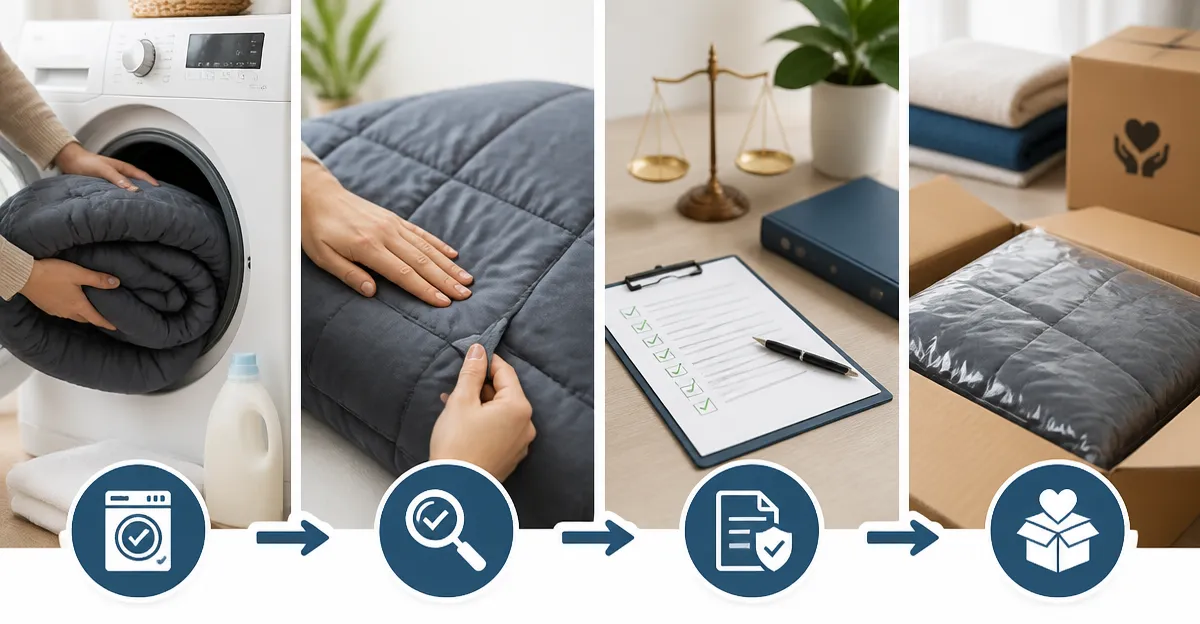
Introduction
Donating a used weighted blanket can provide comfort to individuals who lack access to therapeutic sleep aids. This guide explains how to assess condition, sanitize the blanket, comply with legal standards, and package the item for charitable organizations. Readers will learn practical actions that protect both recipients and donors from health risks. By following these steps, one can turn an unwanted blanket into a valuable community resource.
What You'll Need
- Gentle laundry detergent suitable for cotton fabrics
- Large capacity washing machine (front‑load preferred)
- Reusable duvet cover or breathable laundry bag
- Cleaning gloves and disinfectant spray
- Sturdy cardboard box or reusable tote for shipping
- Optional: a high‑quality replacement like the Smart Queen Weighted Blanket for personal use
Step 1: Assess the Blanket's Condition
The first step is to determine whether the blanket remains safe for donation. Inspect the fabric for tears, frayed seams, or missing beads, as structural damage can cause leakage of glass beads and create hazards. Verify that the blanket has not been exposed to mold, strong odors, or pet stains, which are difficult to remove completely. If the blanket passes visual inspection, proceed to cleaning; otherwise, consider recycling the fibers or discarding the item responsibly.
Step 2: Clean and Sanitize the Blanket
Weighted blankets are typically constructed with cotton blends and glass beads, requiring gentle yet thorough cleaning. Use a cold, gentle cycle with a mild detergent, and add a cup of white vinegar to neutralize odors and assist in disinfection. Place the blanket inside a large laundry bag or a breathable duvet cover to protect the beads from shifting during the wash; this also reduces noise and wear on the machine. After washing, tumble dry on low heat or lay the blanket flat in a well‑ventilated area, ensuring it is completely dry before packaging to prevent mold growth.
For donors who seek a reliable example of proper construction, the Smart Queen Weighted Blanket demonstrates even weight distribution through its 7‑layer design and 5"×5" bead compartments. Its machine‑washable cotton fabric illustrates how a quality blanket can endure repeated cleaning without compromising comfort, making it a useful reference when evaluating donated items.
Step 3: Verify Legal and Organizational Requirements
Before donating, research the regulations governing textile donations in your jurisdiction, as some states require proof of sanitation or restrict the donation of bedding containing glass beads. Charitable organizations often request a written statement confirming that the blanket has been laundered and is free of defects. If the recipient organization is a medical facility, additional certifications may be necessary, such as compliance with the Health Insurance Portability and Accountability Act (HIPAA) for patient‑related items.
Contact the charity directly to obtain their specific intake forms and to confirm whether they accept weighted blankets. Maintaining documentation of the cleaning process, including dates and detergent used, can simplify this verification and protect the donor from liability.
Step 4: Package the Blanket Securely
Proper packaging protects the blanket during transport and preserves its cleanliness. Fold the blanket neatly, avoiding sharp creases that could stress the stitching. Place the folded blanket inside a clean, reusable tote or a sturdy cardboard box lined with a plastic sheet to prevent moisture ingress.
Label the package with the donor’s contact information and the charity’s address, and include a brief note describing the blanket’s size (41"×60"), weight (5 lb), and material composition (80 % cotton). This transparency assists the receiving organization in inventory management and ensures the blanket reaches the appropriate beneficiaries.
Step 5: Deliver or Ship the Donation
Arrange delivery according to the charity’s preferred method. Many local shelters accept drop‑offs during specific hours, while larger nonprofits may provide prepaid shipping labels for nationwide distribution. If shipping, select a reputable carrier and purchase insurance for the package’s value, especially when the blanket is of high quality.
After the donation is accepted, request a receipt for tax‑deduction purposes. The receipt should list the blanket’s fair market value, which can be approximated using the price of a comparable new item such as the Smart Queen Weighted Blanket, currently rated 4.6 out of 5 stars by over six hundred reviewers.
Tips & Pro Tips
- Use a duvet cover during washing to prevent bead leakage and reduce machine noise.
- Dry the blanket on a low‑heat setting; high temperatures can weaken stitching and cause bead migration.
- Keep a log of cleaning dates and methods; this documentation is valuable for charities that require proof of sanitation.
- When donating multiple blankets, bundle them in a single large box to minimize shipping costs and handling.
- Consider donating to organizations that specialize in sleep‑related therapy, as they are more likely to understand the therapeutic value of weighted blankets.
Troubleshooting
Problem: Glass beads shift or leak during washing.
Solution: Ensure the blanket is placed inside a zip‑top laundry bag or a breathable duvet cover to contain the beads. Verify that the washing machine’s drum is not overloaded, which can cause excessive agitation.
Problem: Persistent odor after washing.
Solution: Re‑wash using a cup of baking soda and a second rinse cycle. Air‑dry the blanket in direct sunlight if possible, as UV light helps neutralize odors.
Conclusion
Donating a used weighted blanket requires careful assessment, thorough cleaning, compliance with legal standards, and secure packaging. By following the steps outlined in this guide, donors can ensure that their blankets arrive in safe, hygienic condition and provide therapeutic comfort to those in need. The process also protects donors from liability and maximizes the charitable impact of each donation. One should feel confident that a well‑maintained blanket can make a meaningful difference in another person’s sleep health.
Products Mentioned in This Guide
Frequently Asked Questions
How can I tell if my weighted blanket is still safe to donate?
Inspect the fabric for tears, frayed seams, missing beads, and any strong odors; if the blanket is intact and cleanable, it’s generally safe to donate.
What cleaning method should I use to sanitize a used weighted blanket?
Wash it in a large front‑load machine on a gentle cycle with mild detergent, then tumble dry low or air‑dry completely before packaging.
Are there any legal restrictions on donating used weighted blankets?
Most jurisdictions allow donation of clean, intact blankets, but check local health regulations and the receiving organization’s policies for any specific requirements.
How should I package a cleaned weighted blanket for shipment or drop‑off?
Fold the blanket, place it in a breathable laundry bag or duvet cover, then secure it inside a sturdy cardboard box or reusable tote with padding if needed.
Which charities typically accept donated weighted blankets?
Shelters, hospitals, veteran support groups, and organizations like the National Alliance on Mental Illness often welcome gently used weighted blankets.