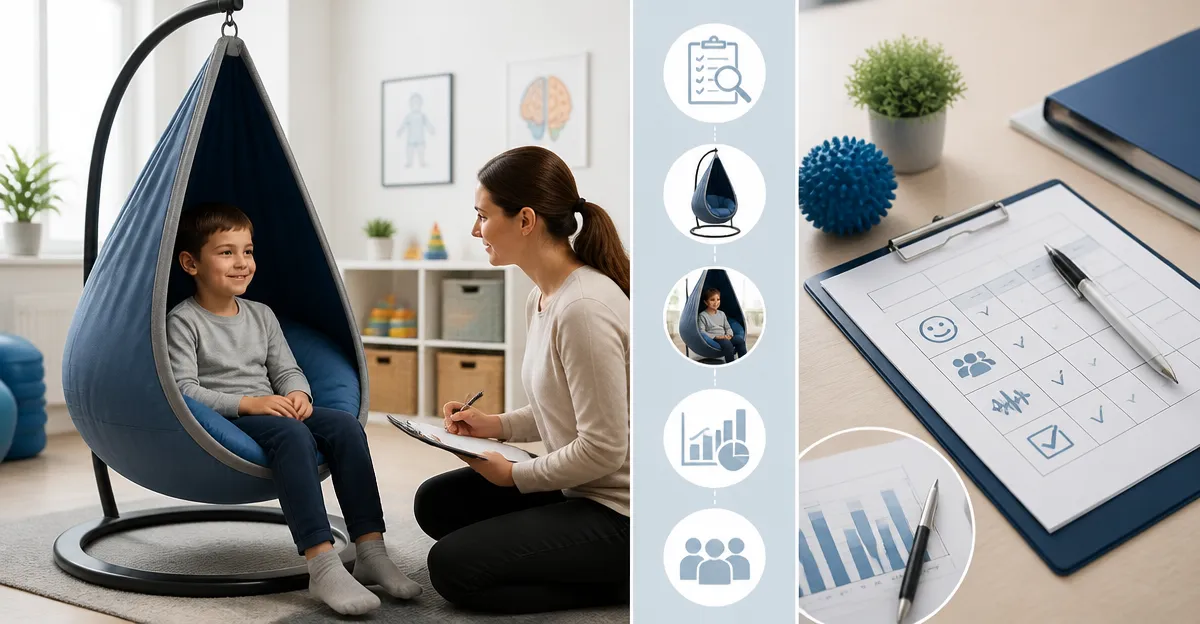
Designing Sensory Trial Protocols for Weighted Products in the Clinic: A Step‑by‑Step Guide for Clinicians
Introduction
This guide explains how clinicians can develop rigorous sensory trial protocols for weighted products used in therapeutic settings. Readers will learn the scientific rationale, practical steps for protocol design, methods for data collection, and how to integrate evidence‑based products such as the BABAMU Sensory Swivel Egg Chair. The article balances theoretical foundations with actionable recommendations, enabling clinicians to enhance treatment outcomes while maintaining safety and ethical standards.
Background and Context
Weighted and vestibular products provide proprioceptive and vestibular input that can modulate arousal, attention, and motor planning in children with sensory processing challenges. Proprioception refers to the sense of body position and movement, while vestibular input originates from the inner ear and influences balance and spatial orientation. Research indicates that controlled exposure to such inputs can improve focus, reduce anxiety, and support motor skill acquisition. However, the therapeutic benefit depends on individualized dosage, proper equipment selection, and systematic outcome measurement.
Clinicians must therefore adopt a structured protocol that defines inclusion criteria, dosage parameters, safety monitoring, and objective outcome metrics. The protocol should also align with institutional ethics policies and be reproducible across different settings, such as schools, therapy rooms, or home‑based programs.
Key Concepts for Protocol Development
Before implementing a trial, clinicians should become familiar with several core concepts:
- Dosage: The amount of time and frequency a child engages with the weighted product. Typical therapeutic sessions range from 5 to 15 minutes, repeated 2 to 3 times per week, depending on tolerance.
- Intensity: The level of sensory input, which can be modified by adjusting weight, speed of rotation, or surface texture.
- Baseline Assessment: Collection of pre‑intervention data using standardized tools such as the Sensory Profile, Clinical Observation of Motor Skills, or the Child Behavior Checklist.
- Outcome Measures: Selection of quantitative and qualitative metrics, including attention span, self‑regulation scores, and parent/teacher rating scales.
- Safety Parameters: Guidelines for weight limits, supervision ratios, and emergency procedures.
Step‑by‑Step Protocol Design
1. Define the Clinical Question
Identify the specific sensory challenge the trial intends to address. For example, a clinician may ask, "Does a 10‑minute daily session with a vestibular swivel chair improve on‑task behaviour in children with ADHD?" A clear question guides inclusion criteria and outcome selection.
2. Select Appropriate Participants
Establish inclusion and exclusion criteria based on age, diagnosis, weight capacity of the equipment, and medical history. Ensure that each participant’s weight does not exceed the product’s maximum load; the BABAMU chair supports up to 220 lbs, making it suitable for most school‑aged children.
3. Choose the Weighted Product
Evaluate the product against therapeutic goals, safety standards, and practical considerations such as space and durability. The BABAMU Sensory Swivel Egg Chair offers 360° rotation, a reinforced metal base, and a heat‑resistant polypropylene surface, all of which contribute to a stable and hygienic therapeutic environment.
4. Determine Dosage and Scheduling
Develop a dosage schedule that balances therapeutic exposure with fatigue risk. A common schedule includes three 10‑minute sessions per week for six weeks, with a brief observation period before each session to assess readiness.
5. Establish Outcome Measures
Select both objective and subjective measures. Objective measures may include timed attention tasks, while subjective measures could involve parent‑reported sensory questionnaires. Document baseline scores before the first session.
6. Implement Safety Protocols
Create a checklist that includes weight verification, inspection of the chair’s anti‑slip rubber feet, and verification of the surrounding area for hazards. Supervision by a trained therapist is mandatory throughout each session.
7. Conduct the Trial
Follow the dosage schedule, record session observations, and collect outcome data at predetermined intervals (e.g., weekly). Adjust intensity only after reviewing tolerance and safety data.
8. Analyze Data and Report Findings
Use statistical methods appropriate for small sample sizes, such as paired t‑tests or non‑parametric Wilcoxon signed‑rank tests. Summarize findings in a format suitable for internal review or publication.
Product Recommendation and Integration
Weighted products vary in design, load capacity, and sensory output. The following table compares three common categories and highlights where the BABAMU Sensory Swivel Egg Chair adds unique value.
| Category | Typical Use | Key Features | Recommended Product |
|---|---|---|---|
| Vestibular Swivel Chairs | Enhances balance, spatial awareness, and self‑regulation. | 360° rotation, sturdy base, weight capacity ≥200 lbs, easy cleaning. | BABAMU Sensory Swivel Egg Chair |
| Weighted Lap Pads | Provides deep pressure input while seated. | Removable covers, adjustable weight inserts, portable. | Generic Weighted Lap Pad (example only, not linked) |
| Therapeutic Rockers | Offers rhythmic movement for calming. | Low‑profile design, non‑slip base, weight limit 150 lbs. | TheraRock Classic Rocker (example only) |
The BABAMU chair excels in providing controlled vestibular stimulation while maintaining safety through its reinforced metal base and anti‑slip feet. Its heat‑resistant polypropylene surface allows quick cleaning, which is essential in clinical environments where infection control is paramount.
Comparison and Selection Guide
Clinicians should evaluate products using a systematic checklist:
- Load Capacity: Verify that the chair can support the heaviest participant.
- Material Safety: Choose non‑toxic, heat‑resistant, and easy‑to‑clean materials.
- Movement Range: Ensure the device offers the desired degree of rotation or rocking.
- Stability Features: Look for anti‑slip feet and a wide base to prevent tipping.
- Maintenance Requirements: Prefer waterproof surfaces that can be wiped down with disinfectant.
- Cost‑Effectiveness: Compare price to durability and therapeutic benefit.
Applying this checklist to the BABAMU Sensory Swivel Egg Chair reveals that it meets or exceeds each criterion, making it a strong candidate for most clinical trials involving vestibular input.
Best Practices and Tips
- Document each session with a standardized observation form to capture qualitative data such as mood changes or signs of overstimulation.
- Train all staff members on proper weight verification and equipment inspection before each use.
- Incorporate a brief warm‑up activity (e.g., deep‑breathing) prior to the sensory session to enhance receptivity.
- Rotate participants through the chair in a predictable schedule to reduce anxiety associated with novelty.
- Maintain a log of cleaning cycles; the chair’s waterproof surface should be wiped with an EPA‑approved disinfectant after each session.
- When possible, combine vestibular input with other sensory modalities, such as tactile brushes, to create a multimodal therapeutic experience.
Frequently Asked Questions
- 1. What age range is appropriate for the BABAMU Sensory Swivel Egg Chair?
- The chair is suitable for children aged 3 years and older, provided the child’s weight does not exceed 220 lbs.
- 2. How often can a child safely use the chair in a week?
- Clinical guidelines recommend 2‑3 sessions per week, each lasting 5‑15 minutes, with at least one rest day between sessions.
- 3. Can the chair be used in a classroom setting?
- Yes, the reinforced metal base and anti‑slip rubber feet ensure stability on typical classroom floors, and the quiet swivel mechanism does not disrupt peers.
- 4. How does the chair help with motion sickness?
- The controlled centrifugal motion gently stimulates the vestibular system, which can reduce sensitivity to motion and alleviate car, sea, or air sickness over repeated exposure.
- 5. What cleaning protocol is recommended?
- Wipe the polypropylene surface with a mild disinfectant solution after each use; avoid abrasive cleaners that could damage the smooth edges.
- 6. Is any additional safety equipment required?
- Supervision by a qualified therapist is essential, and the chair should be placed away from sharp edges or obstacles.
- 7. How can progress be measured objectively?
- Use standardized tools such as the Sensory Processing Measure or timed attention tasks, and compare pre‑ and post‑intervention scores.
Conclusion
Designing sensory trial protocols for weighted products demands a blend of scientific rigor, safety awareness, and practical product knowledge. By following the step‑by‑step framework presented in this guide, clinicians can create reproducible studies that yield meaningful data on the therapeutic impact of devices such as the BABAMU Sensory Swivel Egg Chair. Consistent documentation, adherence to dosage guidelines, and systematic outcome measurement will enhance the credibility of findings and support evidence‑based practice.
Products Featured in This Guide
BABAMU Sensory Swivel Egg Chair
Weight Capacity: 220 lbs; Material: Heat‑resistant polypropylene; Features: 360° swivel, reinforced metal base, anti‑slip rubber feet, waterproof surface.
Why it is featured: The chair provides controlled vestibular input, robust safety features, and easy maintenance, making it an ideal choice for clinical sensory trials.