Introduction
This guide explains how to size a weighted lap pad for car seats and other transport environments, ensuring that the pad provides therapeutic deep‑touch pressure while remaining safe and comfortable. Readers will learn how to measure the lap area, calculate the appropriate weight, select a pad that fits the vehicle seat geometry, and secure it to prevent shifting during travel. By following these steps, one can create a consistent sensory experience for children or adults who benefit from weighted input, reducing anxiety and improving focus during journeys. The information is valuable for parents, caregivers, and occupational therapists seeking practical solutions without compromising vehicle safety.
What You'll Need
- Measuring tape or ruler
- Scale to verify pad weight (optional)
- Secure straps or non‑slip pads
- Harkla Weighted Lap Pad (Blue or Gray)
- Florensi Weighted Lap Pad
- HUANUO Laptop Lap Desk (for added stability)
- LapGear Home Office Lap Desk (alternative stability platform)
Step 1: Measure the Available Lap Space
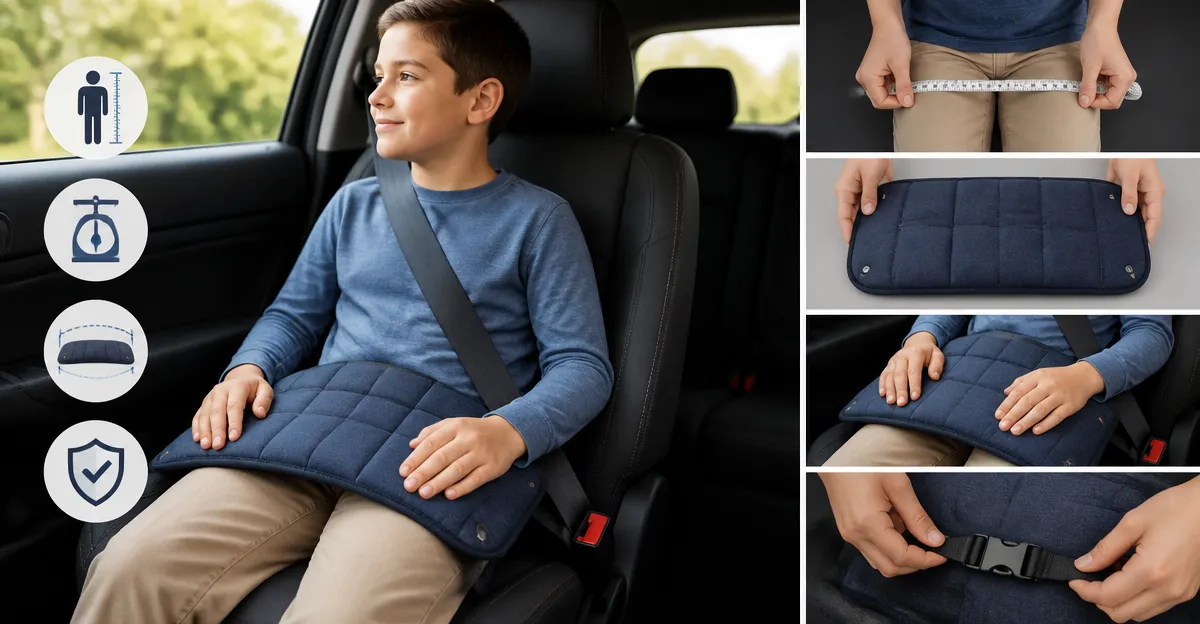
The first action is to determine the exact dimensions of the lap area within the car seat. Place the measuring tape across the widest part of the child's lap while seated, noting the width and length in inches; typical dimensions range from 18‑22 inches wide and 19‑23 inches long. Record these numbers because the pad must not extend beyond the seat edges, which could interfere with seat belts or airbags. If the vehicle has a bucket seat, also measure the curvature of the side bolsters to ensure the pad will conform without creating pressure points.
Step 2: Determine the Appropriate Weight
Weighted lap pads are most effective when they provide approximately 10 % of the user's body weight, with a maximum of 15 % for individuals with strong sensory tolerance. Use a scale to weigh the child or adult, then calculate ten percent of that figure; for a 50‑lb child, a 5‑lb pad is ideal. The Harkla Weighted Lap Pad offers a precise 5‑lb weight, certified by the US CPSC, and features a 100 % polyester minky dotted fabric that distributes pressure evenly. Priced at $39.99 with a 4.7‑star rating from 837 reviews, it combines safety certification with tactile comfort, making it a reliable choice for the calculated weight range.
For families seeking a slightly different aesthetic or a backup option, the Harkla Weighted Lap Pad in gray provides the same 5‑lb weight and features, ensuring consistency across color preferences. Both pads include a removable cover for easy cleaning, reinforcing durability during frequent travel.
Step 3: Choose the Correct Pad Size and Shape
After confirming weight, match the pad dimensions to the measurements obtained in Step 1. The Harkla pads measure 21 in × 19 in, fitting most standard car seats while leaving a small margin for belt clearance. If the vehicle seat is narrower or the user prefers a more compact option, the Florensi Weighted Lap Pad measures 20 in × 23 in and weighs 5 lb, offering a slightly slimmer profile without sacrificing therapeutic pressure. Priced at $29.99 with a 4.7‑star rating from 859 reviews, it includes a breathable viscose‑polyester blend and a stylish blue constellation design, adding visual calmness during travel.
When selecting a pad, consider the material’s breathability; minky fabric retains warmth, which may be advantageous in cooler climates but could cause overheating in hot weather. The Florensi pad’s viscose‑polyester blend provides better airflow, making it suitable for summer trips or longer drives where temperature regulation is essential.
Step 4: Secure the Pad in the Car Seat
Securing the pad prevents it from sliding when the vehicle accelerates, brakes, or turns. Place the pad on the lap, then use non‑slip silicone strips or adjustable straps that wrap around the seat back and anchor to the seat frame. The HUANUO Laptop Lap Desk can serve as a rigid base; its cushioned pillow conforms to the lap while the flat surface offers a stable platform for the weighted pad. Priced at $28.99 with a 4.5‑star rating from 15,771 reviews, the desk includes an anti‑slip wrist pad and a storage pocket, adding convenience for small accessories during travel.
Alternatively, the LapGear Home Office Lap Desk provides a dual‑bolster cushion and a built‑in device ledge that can hold the weighted pad securely while keeping the lap cool. At $34.99 with a 4.7‑star rating from 51,048 reviews, its spacious design accommodates both the pad and a tablet, reducing the need for additional straps. Position the desk on the seat, place the weighted pad atop, and fasten the desk’s built‑in handle to the seat belt loop for extra stability.
Step 5: Test Comfort and Safety
Before embarking on a full journey, conduct a short test drive to evaluate comfort, pad stability, and any interference with safety systems. Observe whether the pad shifts when the vehicle stops or turns; if movement occurs, add additional non‑slip material or adjust strap tension. Verify that the seat belt can still be fastened over the pad without excessive pressure on the user’s torso; the belt should rest on the pad’s outer edge, not compress the weighted core. Ensure that airbags, if present, are not obstructed by the pad or the supporting desk.
During the test, ask the child or adult to report any sensations of heat, pressure, or restriction. A well‑fitted pad should feel like a gentle hug, providing deep‑touch pressure without causing discomfort. If the user feels overly warm, consider the Florensi pad for its breathable fabric, or add a thin cloth layer between the pad and the lap.
Tips & Pro Tips
- Always choose a pad that is CPSC certified for safety; certification ensures the weight distribution meets regulatory standards.
- For long trips, carry a spare removable cover to keep the pad clean; most Harkla pads include a zippered storage bag.
- Combine a weighted lap pad with a calming visual element, such as the Florensi pad’s constellation design, to reinforce sensory regulation.
- When using a lap desk as a base, position the desk’s built‑in handle through the seat belt loop to create a three‑point anchor system.
- Replace the pad if the stitching shows signs of wear, especially after repeated washing cycles; durable construction prolongs therapeutic efficacy.
Troubleshooting
| Problem | Possible Cause | Solution |
|---|---|---|
| Pad slides during braking | Insufficient non‑slip surface | Apply silicone non‑slip pads beneath the weighted pad or use tighter straps. |
| Seat belt cannot be fastened | Pad too thick or positioned incorrectly | Re‑position the pad so the belt passes over the edge, or select a thinner lap desk base. |
| User feels overheating | Fabric retains heat | Switch to the Florensi Weighted Lap Pad with breathable viscose blend, or place a thin cotton layer between pad and skin. |
Conclusion
By measuring the lap space, calculating the correct weight, selecting a suitably sized pad, and securing it with a stable base, one can ensure that a weighted lap pad enhances comfort and sensory regulation during car travel. The recommended products—Harkla Weighted Lap Pad, Florensi Weighted Lap Pad, HUANUO Laptop Lap Desk, and LapGear Home Office Lap Desk—provide certified safety, durable construction, and practical features that simplify the process. Implementing the steps outlined in this guide will enable caregivers to create a secure, soothing environment for children and adults alike, turning every journey into a calming experience.
Products Mentioned in This Guide
Frequently Asked Questions
How do I measure the lap area for a weighted lap pad?
Use a flexible measuring tape to record the length from the front of the hips to the back of the thighs and the width across the lap while seated.
What weight range is recommended for a weighted lap pad?
Select a pad that weighs about 5‑10% of the user’s body weight, never exceeding 10% for safety.
Can I use a weighted lap pad in any car seat?
Choose a pad that matches the seat’s geometry and secure it with straps or non‑slip pads to prevent shifting.
Do I need a scale to verify the pad’s weight?
A scale is optional but helpful for confirming the pad meets the calculated weight target.
How should I secure the weighted lap pad during travel?
Attach the pad with the provided straps or place it on non‑slip material, ensuring it stays flat and does not interfere with seat belts.