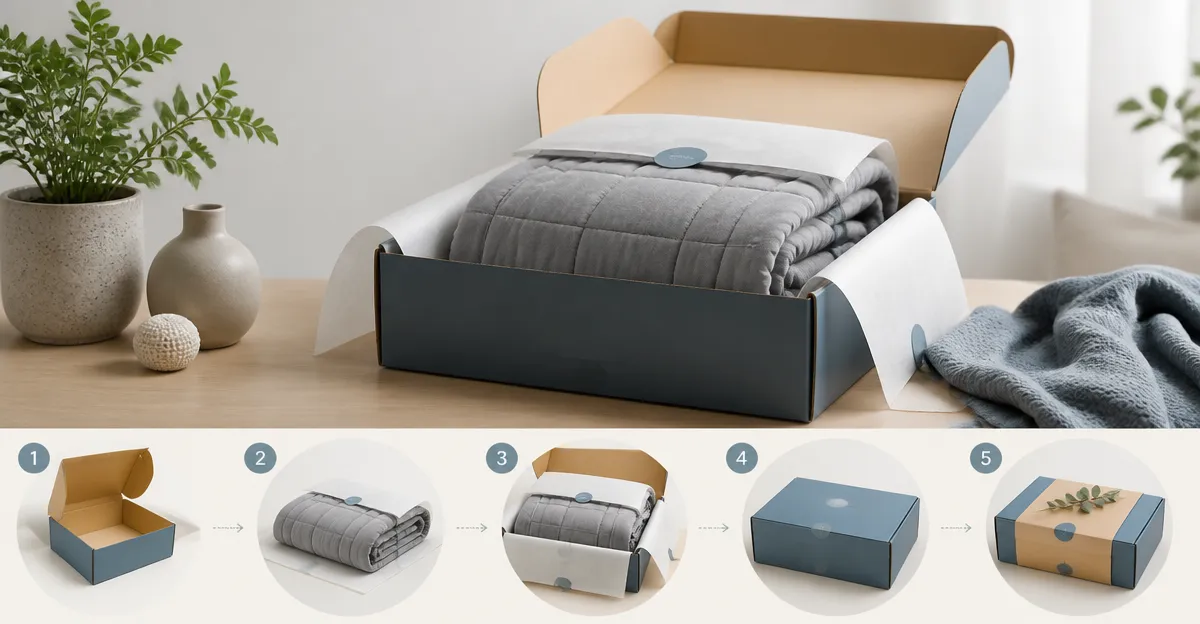
How to Create Sensory‑Friendly Packaging for Weighted Blankets: A Step‑by‑Step Guide to Calming, Accessible Unboxing
Introduction
When a weighted blanket arrives, the unboxing experience can reinforce the therapeutic benefits of the product. A sensory‑friendly package reduces anxiety, supports neurodiverse users, and creates a memorable first impression. This guide explains how to design packaging that is calming, accessible, and aligned with the health‑focused nature of weighted blankets. Readers will learn how to select materials, incorporate tactile cues, write clear instructions, and use sustainable solutions. By following the steps, one can produce packaging that enhances comfort while remaining cost‑effective and environmentally responsible.
The information presented is practical for small businesses, independent creators, and larger brands alike. Although the guide references specific Amazon products as tools, the principles can be applied without any purchase. The recommended items have been chosen because they exemplify high‑quality construction, reliable performance, and positive customer sentiment.
What You’ll Need (Optional)
- Recyclable cardboard or kraft paper sheets
- Soft-touch interior liners (e.g., microfiber or breathable fabric)
- Velcro or magnetic closure strips
- Printed instruction cards with large fonts and simple icons
- Eco‑friendly protective sleeves for the blanket itself
These materials are readily available from packaging suppliers. For demonstration, the guide will reference actual weighted blankets that can serve as test units during development.
Step 1: Define Sensory Goals for the Packaging
The first step is to articulate the sensory objectives. The packaging should minimize visual clutter, reduce harsh textures, and provide predictable opening cues. Identify the target audience—individuals with anxiety, autism spectrum disorder, or sensory processing challenges—and list the specific needs such as low‑glare colors, soft tactile surfaces, and clear step‑by‑step instructions.
Document the goals in a brief brief, for example:
- Use muted, pastel hues that do not overstimulate the visual system.
- Incorporate a soft‑touch liner that feels similar to the blanket’s fabric.
- Provide a single, intuitive opening mechanism rather than multiple tabs.
By establishing these criteria, the design team can evaluate each packaging element against measurable standards.
Step 2: Choose a Calming Color Palette and Visual Design
A calming palette typically includes cool blues, gentle greys, and muted greens. Avoid high‑contrast patterns that could trigger visual stress. When selecting colors, reference the branding of the blanket to maintain consistency. For example, the yescool Weighted Blanket is offered in a soothing grey, making a matching grey or soft teal box an intuitive choice.
Design the exterior graphics with simple icons that convey handling instructions without excessive text. Use a high‑contrast font for readability, but keep the overall visual weight low. A matte finish reduces glare compared with glossy coatings, further supporting a calm visual experience.
When testing color choices, print a sample and view it under natural and artificial lighting. Ask a few individuals from the target audience to rate the perceived calmness on a scale of 1‑10. Adjust the palette until the average rating exceeds eight.
Step 3: Select Soft‑Touch Interior Liners
The interior liner should feel gentle against the skin and mirror the blanket’s texture. A breathable microfiber liner is ideal because it provides a cool surface while remaining soft. The L'AGRATY Weighted Blanket utilizes a microfiber shell that is praised for its cooling sensation. Using the same material for the liner creates a cohesive tactile experience from the moment the package is opened.
Key features to look for in a liner material include:
- Hypoallergenic fibers that do not irritate sensitive skin.
- High breathability to prevent heat buildup during handling.
- Durable stitching that resists fraying during repeated openings.
Purchase a small roll of microfiber fabric and cut it to fit the interior dimensions of the box. Secure the liner with a thin strip of adhesive tape that can be removed without leaving residue.
Step 4: Incorporate an Intuitive Closure System
Traditional tape flaps can be confusing for users with fine‑motor challenges. A magnetic closure or Velcro strip offers a single, repeatable action that signals completion. The Mr. Sandman Weighted Blanket is praised for its reversible design, indicating that reversible features are well‑received by consumers who value flexibility. Applying a reversible magnetic strip to the package allows the user to open the box from either side, reducing the need for precise alignment.
Installation steps:
- Measure the width of the box’s opening edge.
- Cut two magnetic strips to match the measurement.
- Attach one strip to the interior flap with a low‑odor adhesive.
- Place the second strip on the opposite side of the box lid.
Test the closure by opening and closing the box ten times. The magnetic pull should feel firm yet effortless, providing clear feedback that the package is securely sealed.
Step 5: Create Clear, Accessible Instruction Cards
Instruction cards should use large, sans‑serif fonts and simple line‑art icons. Avoid dense paragraphs; instead, break instructions into numbered steps with short headings. For example, a card for the YnM Weighted Blanket could read:
- Remove magnetic closure.
- Lift the soft‑touch liner.
- Unfold the blanket gently.
- Place the blanket on a flat surface.
Include a QR code that links to a short video demonstration. The video should feature a calm voiceover describing each motion, which helps auditory learners and reduces reliance on text alone.
Print the cards on recycled paper with a matte coating. This choice aligns with sustainable packaging goals and prevents glare that could distract visual‑sensitive users.
Step 6: Add a Sensory‑Friendly Protective Sleeve
A protective sleeve made from breathable fabric can shield the blanket during transit while adding an extra tactile layer. The Smart Queen Weighted Blanket emphasizes a breathable cotton shell, demonstrating that cotton is an excellent candidate for a sleeve material. Cotton is soft, hypoallergenic, and easy to wash, making it suitable for repeated handling.
Construction guidelines:
- Cut the fabric to a size that slides over the folded blanket with a one‑inch clearance on all sides.
- Sew a simple envelope closure using a double‑stitched seam for durability.
- Include a small tag inside the sleeve that lists care instructions in plain language.
After placing the blanket inside the sleeve, fold the sleeve neatly and insert it into the outer box. The sleeve adds a soft, familiar texture that prepares the user for the comforting feel of the blanket itself.
Step 7: Test the Packaging with Real Users
Prototype testing is essential to validate that the packaging meets sensory goals. Recruit a small group of individuals who represent the target audience, such as adults with anxiety or parents of children with sensory processing disorders. Provide each participant with the packaged blanket and observe the unboxing process.
Collect feedback on the following criteria:
- Visual calmness of the exterior design.
- Ease of opening the magnetic closure.
- Comfort of the interior liner against the skin.
- Clarity of the instruction card.
- Overall satisfaction with the unboxing experience.
Use a simple rating scale and open‑ended questions. Analyze the data to identify any recurring pain points, then iterate on the design. Continuous improvement ensures that the final packaging delivers a consistently soothing experience.
Tips & Pro Tips
- Use low‑odor adhesives: Strong chemical smells can be overwhelming for sensitive users. Choose water‑based adhesives that dry quickly and emit minimal scent.
- Include a tactile cue: A small, raised symbol (such as a circle) on the magnetic closure can guide users with visual impairments to the correct opening spot.
- Consider reusable packaging: A well‑designed box can become a storage container for the blanket, encouraging sustainability and providing a consistent tactile environment.
- Label weight clearly: Many users select blankets based on a percentage of body weight. Display the weight in both pounds and kilograms on the exterior of the box.
- Provide a brief sensory guide: A one‑page sheet that explains deep‑touch pressure and how the blanket works can reassure first‑time users.
Troubleshooting
Problem: The magnetic closure feels too weak and the box opens unintentionally.
Solution: Replace the magnetic strips with higher‑grade neodymium magnets that provide stronger pull while maintaining a thin profile. Ensure the magnets are positioned directly opposite each other for maximum attraction.
Problem: The interior liner shifts during transport, exposing the blanket.
Solution: Add a thin elastic band around the folded blanket before placing it in the liner. This keeps the blanket snug and prevents movement.
Problem: Users report difficulty reading the instruction card due to small font size.
Solution: Increase the font size to at least 14 pt and use high‑contrast black text on a light background. Include a QR code that links to an audio narration of the steps.
Conclusion
Creating sensory‑friendly packaging for weighted blankets requires careful attention to visual, tactile, and cognitive cues. By defining clear sensory goals, selecting soft‑touch materials, using intuitive closures, and providing accessible instructions, one can transform the unboxing experience into an extension of the blanket’s therapeutic benefits. Testing with real users and iterating based on feedback ensures that the final design meets the diverse needs of the audience. Implementing these steps will not only enhance customer satisfaction but also reinforce brand reputation as a champion of inclusive, calming products.
Products Mentioned in This Guide
Frequently Asked Questions
What makes packaging sensory‑friendly for weighted blankets?
It incorporates calming colors, soft tactile materials, clear instructions, and easy‑open features to reduce anxiety and support neurodiverse users.
Which materials are best for eco‑friendly sensory packaging?
Recycled cardboard, biodegradable inks, and plant‑based cushioning provide sustainability while maintaining a gentle tactile feel.
How can I ensure the unboxing experience is accessible for all users?
Use high‑contrast labels, large fonts, Braille or tactile icons, and a simple pull‑tab or resealable closure.
Do I need special tools to create sensory‑friendly packaging?
No special tools are required; basic packaging equipment plus optional accessories like soft foam inserts or textured liners are sufficient.
What are cost‑effective ways to add tactile cues to packaging?
Add inexpensive elements such as textured paper, fabric patches, or silicone grip strips to provide sensory feedback without raising costs.