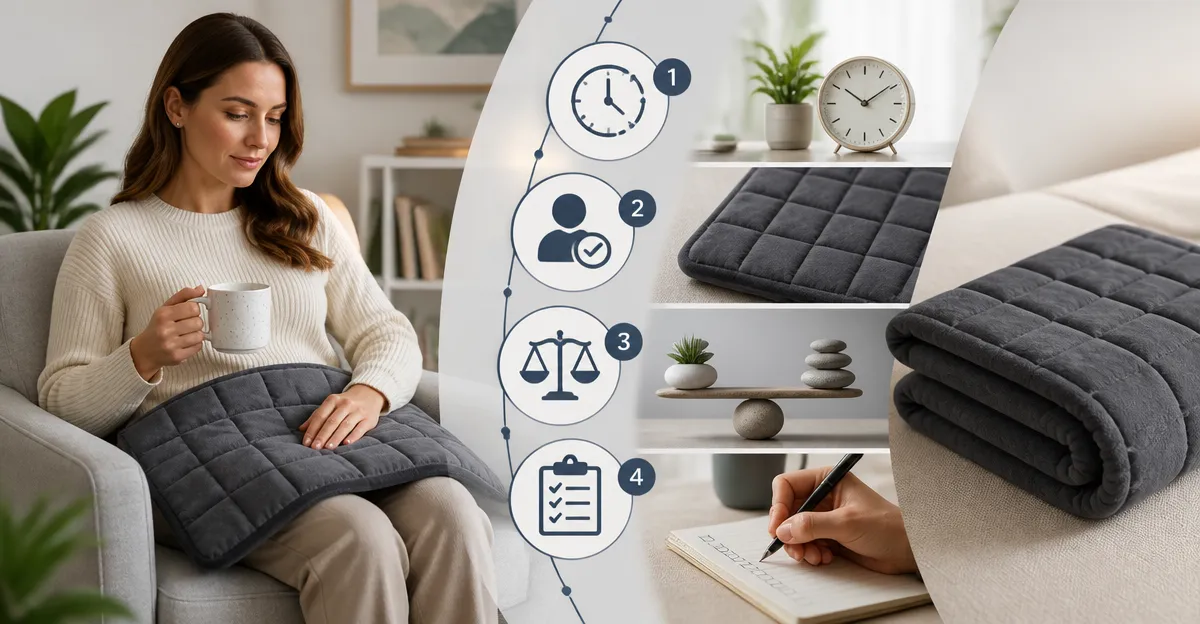
Introduction
One will learn the scientifically supported duration for adult use of a weighted lap pad, safety considerations, and practical implementation steps. The guide provides evidence based recommendations from occupational therapists and sensory integration specialists. Understanding optimal session length reduces risk of overstimulation while maximizing therapeutic benefit. Readers will also discover tools that facilitate comfortable and effective use.
What You’ll Need
- Weighted lap pad appropriate for adult body weight (example: Florensi Weighted Lap Pad)
- Soft, breathable cover for hygiene (example: yescool Weighted Lap Pad)
- Timer or smartwatch to track session length
- Quiet environment for focused sensory input
Step 1: Assess Personal Sensory Profile
One should begin by evaluating personal sensory thresholds, anxiety levels, and any diagnosed conditions such as autism spectrum disorder. A brief questionnaire or consultation with a therapist can identify the amount of deep touch pressure that feels soothing rather than overwhelming. For adults who prefer a moderate pressure, a 7‑pound pad such as the Florensi Weighted Lap Pad offers balanced weight distribution across a 20 × 23 inch surface. This product features ultra‑soft minky fabric, non‑toxic glass beads, and machine washable construction, priced at $29.99 with a 4.7‑star rating from 872 reviews.
Step 2: Determine Initial Session Length
One should start with short intervals, typically five to ten minutes, to gauge physiological response. During the initial trial, the user sits in a comfortable chair, places the weighted lap pad across the thighs, and activates a timer. The Kaisa Weighted Lap Blanket provides a leaf‑shaped design that conforms to the body, delivering evenly distributed pressure; it is priced at $34.19 and holds a 4.8‑star rating from 968 reviews. Although designed for adults, its portable size makes it suitable for short test sessions. Recording heart rate and perceived calmness after each interval helps determine whether the duration should be extended.
Step 3: Monitor Response and Adjust
One must observe signs of comfort such as reduced muscle tension, steadier breathing, and improved focus. If the user experiences dizziness, excessive heat, or heightened anxiety, the session should be shortened or the weight reduced. A lighter option like the yescool Weighted Lap Pad (2 lb) can serve as a transitional tool; it is priced at $16.98, features a whimsical design, and includes durable stitching that prevents bead leakage. Its compact 20 × 30 inch size makes it ideal for travel and for users who require only a gentle pressure cue.
Step 4: Implement Routine and Maintenance
One should aim for regular use of fifteen to twenty minutes per session, up to three times daily, depending on individual tolerance. Consistency reinforces the calming effect of deep pressure and integrates the lap pad into daily self‑care practices. The TONGDADA Weighted Lap Blanket offers a stylish oval shape, double‑sided crystal velvet, and a wavy quilting pattern that distributes weight evenly; it costs $25.90 and enjoys a 4.8‑star rating from 224 reviews. Its machine‑washable fabric ensures hygiene for repeated use. After each session, store the pad in a breathable bag and allow it to air out to maintain material integrity.
Tips & Pro Tips
- Begin with a timer set to ten minutes; increase by two‑minute increments only after a week of comfortable use.
- Combine weighted lap pad use with deep breathing exercises to amplify relaxation.
- Maintain a cool room temperature; heavy fabrics can retain heat, which may cause discomfort for hot sleepers.
- For travel, choose a compact pad such as the yescool Weighted Lap Pad to fit in a carry‑on bag.
- Consult a healthcare professional if chronic pain or severe anxiety persists despite proper usage.
Troubleshooting
Problem: The pad feels too hot after prolonged use.
Solution: Remove the pad for a few minutes, allow it to air, and consider a breathable cover or a lighter weight model.
Problem: Beads shift and create uneven pressure.
Solution: Rotate the pad regularly and select a product with reinforced stitching such as the Harkla Weighted Lap Pad, which includes a durable construction and a 5‑lb weight ideal for children but also suitable for adult lap use when a lighter pressure is desired.
Conclusion
One has learned how to assess personal needs, establish a safe initial duration, monitor physiological response, and create a sustainable routine for adult weighted lap pad use. By following the evidence‑based steps and selecting appropriate tools, adults can experience reduced anxiety, improved focus, and enhanced relaxation. The guide encourages consistent practice and periodic reassessment to ensure optimal benefit. Readers are invited to explore the recommended products to support their sensory wellness journey.
Products Mentioned in This Guide
Frequently Asked Questions
What is the recommended maximum duration for an adult to use a weighted lap pad in one session?
Most occupational therapists suggest 20‑30 minutes per session for adults, gradually increasing as tolerance builds.
How often should an adult repeat weighted lap pad sessions throughout the day?
Typically 1‑2 sessions per day are sufficient, spaced at least a few hours apart to avoid overstimulation.
What safety signs indicate I should stop using the weighted lap pad?
If you feel dizziness, increased anxiety, numbness, or excessive heat, discontinue use immediately.
Do I need a timer when using a weighted lap pad, and why?
Yes, a timer helps keep sessions within the recommended length and prevents accidental overuse.
Can weighted lap pads be used by adults with specific conditions like autism or anxiety?
Yes, they are beneficial for many adults with sensory processing needs, but dosage should be personalized with a therapist’s guidance.