Introduction
In this guide, the reader will learn how to attach a weighted lap pad to a wheelchair in a manner that is both safe and durable. The process enhances comfort for children and adults who benefit from deep‑pressure sensory input while traveling or attending daily activities. By following the outlined steps, one can achieve a secure fit without compromising the wheelchair’s structural integrity. The information provided is valuable for caregivers, therapists, and wheelchair users who seek a practical solution.
Weighted lap pads provide calming pressure that can improve focus, reduce anxiety, and promote relaxation. When used on a wheelchair, the pad must remain stable during movement, which requires careful selection of attachment points and reliable fastening methods. The guide presents a systematic approach that can be applied to most manual and powered wheelchairs.
What You’ll Need
- A weighted lap pad such as the ODOXIA Sloth Weighted Lap Pad or the MAXTID Dinosaur Weighted Lap Pad
- Heavy‑duty Velcro straps or nylon webbing with buckles (minimum 2‑inch width)
- Adjustable zip ties (optional for extra security)
- Scissors or a strap cutter
- Measuring tape
- Soft padding or foam strips to protect frame edges
Step 1 – Identify Secure Attachment Points
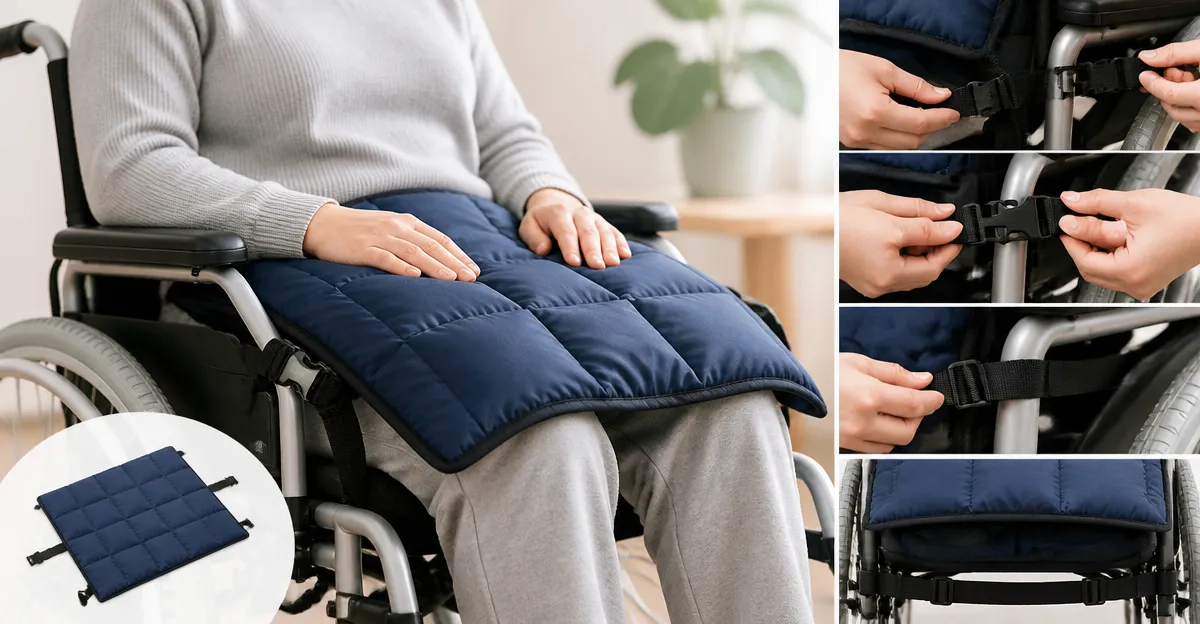
The first major step is to examine the wheelchair frame and locate sturdy points where the lap pad can be fastened. Ideal locations include the rear crossbars, the arm‑rest supports, and the under‑seat brackets. One should avoid thin tubing or decorative elements that could be damaged by pressure. Measuring the distance between these points ensures that the chosen straps will reach without excessive slack.
Choosing appropriate attachment points prevents the pad from shifting during propulsion or when navigating uneven terrain. It also distributes the weight evenly across the frame, reducing the risk of structural fatigue. If the wheelchair has removable arm rests, those can be re‑installed after the pad is secured to provide additional anchoring surfaces.
Step 2 – Prepare the Fastening Materials
Next, cut the Velcro straps to a length that allows a snug wrap around the identified attachment points while leaving a short tail for the buckle. A typical strap length ranges from 30 to 45 centimeters, depending on the wheelchair model. It is advisable to pre‑test the strap length by wrapping it loosely around the frame before making any cuts.
Heavy‑duty Velcro offers a strong shear resistance, which is essential for holding a 5‑pound weighted pad in place. The buckles provide quick release capability, enabling caregivers to remove the pad for cleaning or when the wheelchair is not in use. Zip ties can be employed as secondary reinforcement for users who require an extra layer of security.
Step 3 – Position the Weighted Lap Pad
Place the chosen lap pad on the wheelchair seat so that it rests comfortably on the user’s lap. For a child who prefers a whimsical design, the ODOXIA Sloth Weighted Lap Pad offers a friendly sloth shape that encourages engagement. It measures 18.5 x 23.6 inches and weighs 5 pounds, providing ample surface area for calming pressure.
The pad features a removable filling, allowing caregivers to adjust the weight if necessary. Its carrying bag simplifies transport and storage. The product holds a rating of 4.6 out of 5 stars from 118 reviews, indicating a high level of customer satisfaction. For users who prefer a dinosaur motif, the MAXTID Dinosaur Weighted Lap Pad measures 16 x 22 inches, is also 5 pounds, and includes a soft minky texture that enhances tactile feedback.
Step 4 – Secure the Pad with Straps
Wrap the prepared Velcro straps around the identified attachment points and over the lap pad, ensuring that the pad remains centered. Pull the strap tightly so that the pad does not shift, then fasten the buckle. The strap should be firm but not so tight that it compresses the pad to the point of discomfort. If the strap crosses the user’s thighs, place a thin foam strip underneath to avoid skin irritation.
Repeat the process on the opposite side of the wheelchair to create a balanced hold. For added confidence, secure a zip tie through the strap loops and tighten it. This secondary measure is particularly useful for active users who may encounter sudden movements.
Step 5 – Test Stability and Adjust
After fastening, the user should sit in the wheelchair and perform a series of gentle movements: leaning forward, turning the wheels, and shifting weight from side to side. Observe whether the lap pad remains in place or slides. If any movement is detected, loosen the straps slightly, reposition the pad, and retighten until a stable configuration is achieved.
It is essential to verify that the fastening does not impede the wheelchair’s folding mechanism or interfere with brake levers. Once the pad passes the stability test, the installation is complete. Regular checks—at least once a week—are recommended to ensure that straps have not loosened due to wear.
Tips & Pro Tips
- Use a soft padding layer between the strap and the wheelchair frame to protect paint and metal.
- Label each strap with a color‑coded tag to simplify future adjustments.
- If the wheelchair has a removable headrest, attach the pad to the headrest brackets for a higher position that can benefit users who sit upright.
- When cleaning the lap pad, remove the filling (if the model permits) and machine wash the cover according to the manufacturer’s instructions.
- Store the Velcro straps in a dry place to maintain their adhesive strength.
Troubleshooting
Problem: The lap pad slides during propulsion.
Solution: Add an additional strap across the rear crossbars and tighten it. Ensure the strap is positioned directly over the pad rather than beside it.
Problem: Straps lose adhesion over time.
Solution: Replace the Velcro with new heavy‑duty strips. High‑quality Velcro maintains grip even after repeated cycles of tightening and loosening.
Conclusion
This guide has demonstrated how to securely attach a weighted lap pad to a wheelchair using readily available fastening materials. By identifying strong attachment points, preparing durable straps, positioning the pad correctly, and testing for stability, one can provide a calming sensory tool without compromising safety. The recommended products—ODOXIA Sloth Weighted Lap Pad and MAXTID Dinosaur Weighted Lap Pad—offer reliable weight, comfort, and child‑friendly designs that enhance the overall experience.
Readers are encouraged to apply the steps outlined, adapt them to their specific wheelchair model, and enjoy the benefits of increased focus and relaxation during everyday activities.
Products Mentioned in This Guide
Frequently Asked Questions
How do I safely attach a weighted lap pad to a manual wheelchair?
Use the wheelchair’s existing frame bolts or seat‑back brackets, securing the pad with sturdy Velcro straps or zip ties, then double‑check that the pad doesn’t shift when the chair moves.
Can I use the same method for powered wheelchairs?
Yes, but verify that the attachment points can handle the extra weight and avoid covering any control panels or battery vents.
What type of fasteners are recommended for a durable fit?
Heavy‑duty Velcro, nylon webbing with buckles, or stainless‑steel zip ties provide a reliable, adjustable hold without damaging the chair.
Will attaching a weighted lap pad affect the wheelchair’s stability?
If the pad is evenly centered and secured tightly, it won’t compromise stability; avoid overloading one side.
How often should I inspect the attachment points?
Check the straps and fasteners before each use and inspect for wear or looseness weekly to maintain safety.