How to Use Weighted Lap Pads with Standing Desks to Boost Focus, Comfort, and Ergonomics
This guide explains how to combine weighted lap pads with a standing‑desk workstation to create a balanced, calming environment. Readers will learn why gentle deep‑touch pressure can improve concentration during long periods of standing. The article also provides actionable steps, product recommendations, and maintenance tips. By the end, one will be able to set up a desk that supports both physical health and mental focus.
What You’ll Need
- Harkla Weighted Lap Pad – 5 lb, premium minky fabric, $39.99, 4.7 / 5 rating.
- Hugsmiling Sequins Lap Pad – 5 lb with flip‑sequin surface, $24.95, 4.6 / 5 rating.
- Florensi 7 lb Weighted Lap Pad – 7 lb, blue constellations, $29.99, 4.7 / 5 rating.
- yescool 2 lb Weighted Lap Pad – dual‑season design, $18.99, 4.7 / 5 rating.
- Florensi 5 lb Weighted Lap Pad – compact travel size, $29.99, 4.7 / 5 rating.
Step 1: Assess Your Standing Desk Configuration
Begin by measuring the height of the desk surface when standing, ensuring that elbows form a 90‑degree angle while typing. Verify that the monitor top aligns with eye level to avoid neck strain. Check that the floor beneath the desk is even, because an uneven surface can diminish the stabilising effect of a lap pad. Document any gaps or wobble, as these will guide the selection of an appropriate weighted pad.
Step 2: Choose the Appropriate Weighted Lap Pad
The optimal pad balances weight, size, and fabric texture for the user’s age and sensory preferences. For children or individuals who prefer a lighter touch, the yescool 2 lb Weighted Lap Pad offers a subtle pressure without overwhelming the body; its dual‑season fabric also provides temperature regulation. For teenagers or adults seeking a stronger deep‑touch pressure, the Florensi 7 lb Weighted Lap Pad delivers a noticeable grounding effect while remaining portable for travel. If visual stimulation is beneficial, the Hugsmiling Sequins Lap Pad combines weight with flip‑sequin interaction, encouraging tactile exploration during brief breaks. Users with a preference for classic, soft textures may opt for the Harkla Weighted Lap Pad, which features 100 % polyester minky fabric and a CPSC safety certification. Finally, the Florensi 5 lb Weighted Lap Pad strikes a middle ground, providing moderate pressure in a compact 20 × 23 inch format ideal for cramped office spaces.
When selecting, consider the guideline that a lap pad should weigh approximately 5‑10 % of the user’s body weight. For a 70‑kg adult, a 5‑lb pad (≈2.3 kg) is a safe starting point, while a 30‑kg child may benefit from a 2‑lb pad. Review the product specifications above to match the user’s weight and sensory needs.
Step 3: Position the Lap Pad Correctly on the Desk
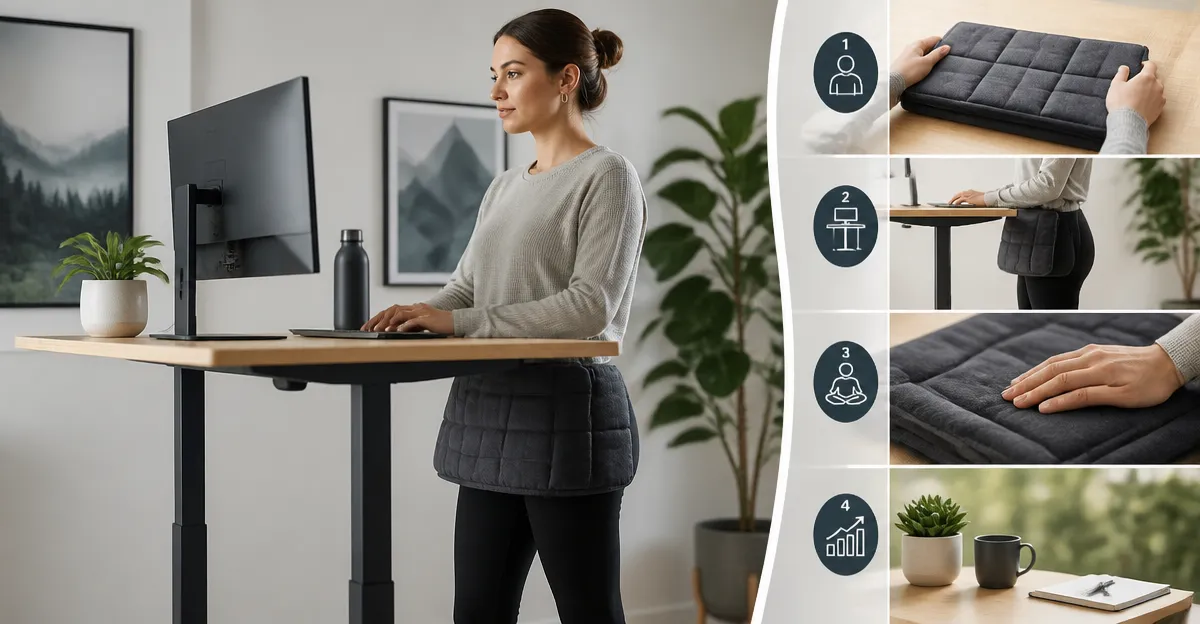
Place the chosen pad on the desk surface so that it rests directly under the forearms while typing, mimicking the feeling of a gentle hug. Align the pad’s longer side parallel to the keyboard to ensure even distribution of pressure across the lap. If the desk has a built‑in keyboard tray, slide the pad onto the tray and secure it with a non‑slip silicone mat if necessary. The pad should not obstruct mouse movement; a small gap of 1‑2 inches on the right side typically preserves ergonomics.
For users who switch between sitting and standing, keep the pad within easy reach so it can be lifted and placed on the lap during seated intervals. The Harkla Weighted Lap Pad folds neatly, making it convenient for rapid transitions. The Hugsmiling Sequins Lap Pad includes reinforced stitching that resists wear from frequent handling.
Step 4: Adjust Desk Height and Monitor Alignment
After the pad is positioned, re‑measure elbow height to confirm that the weight of the pad has not altered the optimal 90‑degree angle. If the desk is too low, raise it using the built‑in pneumatic or electric lift mechanism; if it is too high, lower it until the forearms rest comfortably on the pad without lifting the shoulders. Next, verify that the monitor’s top edge sits at eye level, which reduces neck flexion and complements the calming influence of the weighted pad.
When using a dual‑monitor setup, place the primary screen directly in front of the user and the secondary screen slightly off‑center to avoid excessive head turning. This arrangement, combined with the gentle proprioceptive input from the pad, helps sustain focus during prolonged tasks such as coding, writing, or data analysis.
Step 5: Incorporate Movement and Micro‑Breaks
Even with a weighted lap pad, static standing can lead to fatigue. Schedule micro‑breaks every 30‑45 minutes to stretch the legs, roll the shoulders, and briefly sit down. During these breaks, the pad can be transferred to the lap for a short seated period, reinforcing the deep‑touch pressure and preventing the sensation of “standing fatigue.”
For users who enjoy sensory play, the Hugsmiling Sequins Lap Pad offers a flip‑sequin surface that can be manipulated during breaks, providing a brief visual and tactile reset. The yescool 2 lb Weighted Lap Pad includes a cooling side that can be turned up on warm days, delivering a refreshing sensation after a period of standing.
Step 6: Maintain and Clean Your Weighted Lap Pad
All recommended pads are machine washable, but follow each manufacturer’s care instructions to preserve weight distribution. The Harkla Weighted Lap Pad is machine washable and retains its 5 lb weight after multiple cycles due to reinforced stitching. The Florensi 5 lb Weighted Lap Pad also offers a machine‑washable cover, making it suitable for daily office use.
Spot‑clean any spills with a mild detergent before placing the pad in the dryer on a low‑heat setting. Avoid fabric softeners, as they can affect the texture of the minky material. Store the pad in a breathable bag when not in use to protect it from dust.
Tips & Pro Tips
- Start with the lightest weight that provides noticeable calm; increase gradually if additional pressure is desired.
- Combine the lap pad with a standing‑desk mat to reduce pressure on the feet and improve overall comfort.
- Use a timer app to remind yourself of micro‑breaks; consistent movement enhances the benefits of deep‑touch pressure.
- If the pad feels too warm during summer, flip to the cooling side of the yescool 2 lb Weighted Lap Pad for instant relief.
- For collaborative workspaces, choose a neutral‑colored pad such as the Harkla Weighted Lap Pad to blend with office décor.
Troubleshooting
Problem: The pad shifts during typing.
Solution: Place a non‑slip silicone mat beneath the pad or secure it with Velcro straps designed for desk accessories.
Problem: The weight feels excessive after a few hours.
Solution: Reduce standing time, add a lightweight cushion beneath the feet, or switch to a lighter pad such as the yescool 2 lb Weighted Lap Pad for a temporary break.
Conclusion
Integrating a weighted lap pad with a standing‑desk setup creates a multi‑sensory workstation that supports focus, reduces fatigue, and enhances ergonomic posture. By selecting the appropriate pad, positioning it correctly, and maintaining regular movement, one can experience sustained concentration throughout the workday. The steps outlined in this guide are adaptable to a variety of office environments, ensuring that both students and professionals benefit from the calming influence of deep‑touch pressure.
Products Mentioned in This Guide
Frequently Asked Questions
How do weighted lap pads improve focus while using a standing desk?
The deep‑touch pressure from a weighted lap pad stimulates the parasympathetic nervous system, promoting calmness and better concentration during standing work.
What weight is recommended for a lap pad when standing for long periods?
A 5‑7 lb pad is ideal; it provides enough pressure to be soothing without causing fatigue.
Can I use any weighted lap pad with a standing desk, or are specific features important?
Look for pads with breathable fabrics, secure straps or non‑slip bases, and a weight range that matches your comfort level.
How should I position a weighted lap pad on a standing desk for optimal ergonomics?
Place the pad on your lap with the weighted side against your thighs, keeping elbows at a 90‑degree angle and the monitor at eye level.
What maintenance tips help prolong the lifespan of a weighted lap pad?
Spot‑clean the cover as needed, air‑dry it fully before storage, and avoid exposing it to extreme heat or moisture.