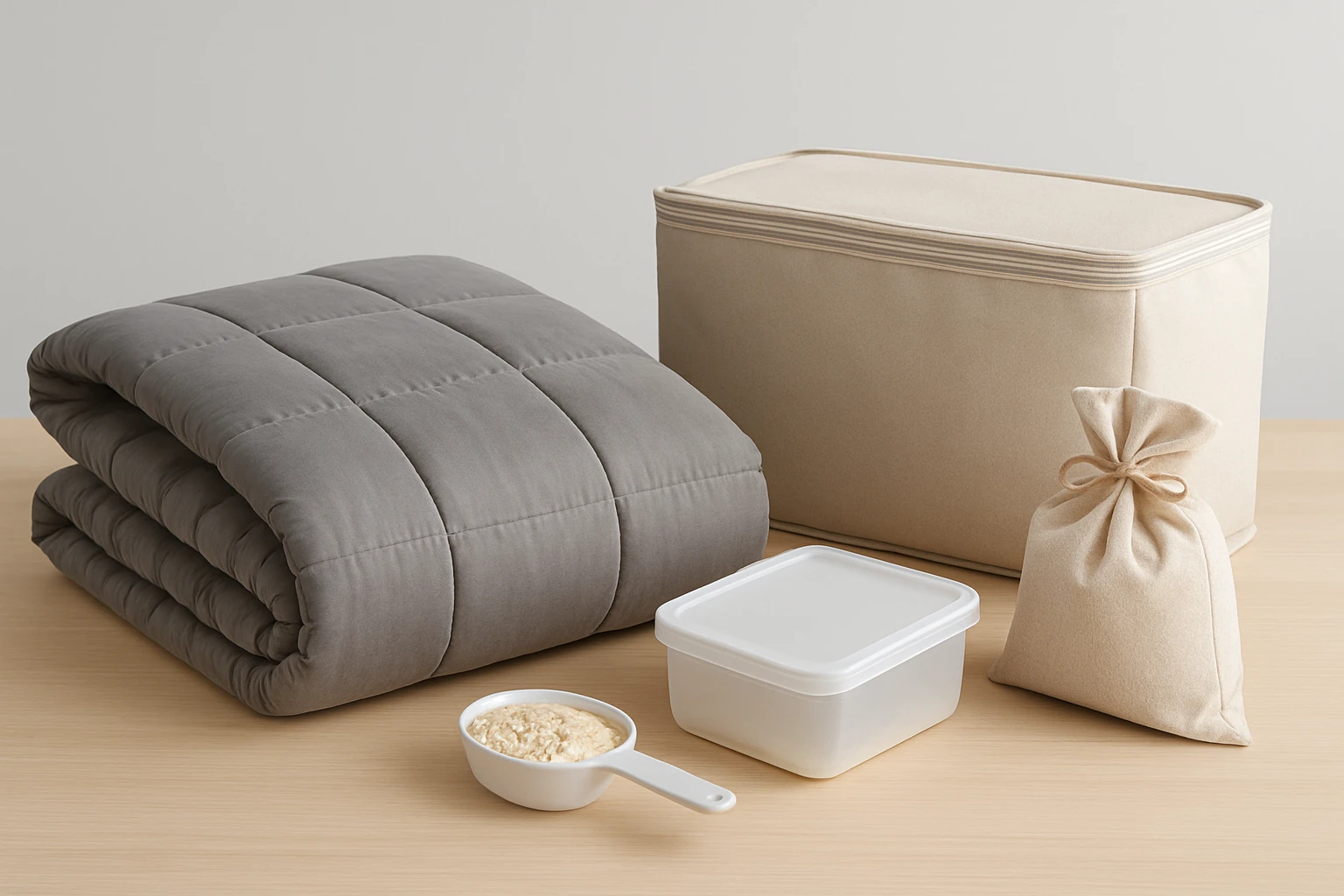
How to Store Weighted Blankets: 10 Best Methods to Prevent Mold, Mildew, and Pests
Introduction
Weighted blankets provide therapeutic pressure that can improve sleep quality and reduce anxiety. However, because they contain dense fabrics and often natural fillings, improper storage can lead to mold, mildew, or pest infestation. This guide explains ten proven methods to store weighted blankets safely, preserving their hygiene and extending their lifespan. Readers will learn practical steps, optional tools, and expert tips that apply to any home environment.
What You’ll Need
- Clean, dry area with adequate airflow
- Moisture‑absorbing packets or silica gel
- Pest‑deterrent sachets (e.g., cedar or lavender)
- Storage containers or bags – see product recommendations below
Step 1: Clean and Dry the Blanket Thoroughly
Before placing a weighted blanket into storage, wash it according to the manufacturer’s instructions, typically a gentle cycle with cold water. After washing, tumble dry on low heat or air‑dry in a well‑ventilated space until completely dry. Ensuring the blanket is fully dry eliminates residual moisture that could foster mold growth during long‑term storage.
Step 2: Select a Breathable Storage Location
Choose a closet, under‑bed drawer, or attic shelf that remains cool and dry. Avoid basements or garages where humidity fluctuates dramatically. If the chosen area is prone to dampness, consider using a dehumidifier or placing moisture‑absorbing packets nearby to maintain a relative humidity below 60 %.
Step 3: Use Compression Bags for Space Efficiency
For households with limited closet space, compression bags can reduce the volume of a weighted blanket without compromising protection. The Easortm Comforter Storage Bags feature a three‑layer compression system that maximizes capacity while remaining washable and tear‑resistant. Priced at $21.99 and rated 4.5 / 5 stars by 992 reviewers, these bags can hold up to five queen‑size comforters, making them ideal for bulky blankets. The reinforced handles and transparent window allow easy retrieval and visual inspection, reducing the need to open the bag frequently.
Step 4: Opt for Clear PVC Bags When Visibility Is Crucial
If you prefer to see the contents at a glance, clear PVC storage solutions are advantageous. The Vieshful Clear Clothes Storage Bags are made from heavy‑duty PVC, include sturdy stainless‑steel zippers, and provide a 40 L capacity per bag. At $13.99 with a 4.5 / 5 rating from 5,439 reviews, they offer durability and transparent windows that simplify inventory checks. Their long handles enable one‑handed carrying, which is useful when moving multiple bags from a closet to a storage unit.
Step 5: Choose Large Capacity Bags for Multiple Blankets
When storing several weighted blankets together, a larger bag reduces the number of individual containers. The WISELIFE Large Storage Bags provide a 100 L capacity, breathable non‑woven fabric, and a clear window for quick identification. Priced at $13.99 and praised with a 4.6 / 5 rating by 12,478 reviewers, these bags feature reinforced handles and two‑way stainless‑steel zippers that stay functional even when fully loaded. Their water‑resistant fabric adds an extra barrier against moisture.
Step 6: Add Moisture‑Absorbing Packets
Place silica‑gel packets or charcoal briquettes inside each storage bag to capture stray humidity. These inexpensive absorbers work continuously and can be re‑charged by drying in sunlight. By maintaining a dry micro‑environment, the risk of mold or mildew formation on the blanket’s fibers is significantly reduced.
Step 7: Implement Pest‑Deterrent Measures
Natural repellents such as cedar blocks, lavender sachets, or mothballs (used sparingly) discourage insects from nesting in stored textiles. Distribute these items evenly throughout the storage area and inside each bag if space permits. Regularly inspect the deterrents and replace them every few months to retain effectiveness.
Step 8: Label and Catalog Your Blankets
Use the transparent window labels on the Easortm Comforter Storage Bags or attach adhesive tags to the Vieshful Clear Clothes Storage Bags. Include the blanket’s weight, color, and last wash date. A simple spreadsheet or smartphone note can track this information, facilitating rotation and ensuring no item remains forgotten for years.
Step 9: Rotate Stored Blankets Periodically
Every three to six months, remove each blanket from its bag, air it out for at least an hour, and check for signs of moisture or pests. This routine refreshes the fabric, prevents odor buildup, and allows you to confirm that moisture absorbers remain effective. Re‑seal the blanket after inspection using the same storage method.
Step 10: Prepare the Blanket for Immediate Use
When you are ready to use a stored weighted blanket, remove it from its container, lay it flat, and allow it to acclimate to room temperature for 30 minutes. If the blanket feels slightly compressed, gently shake it to redistribute the filling evenly. This final step ensures the therapeutic weight distribution is restored, providing the intended comfort.
Tips & Pro Tips
- Store blankets away from direct sunlight to prevent fabric fading.
- Do not stack heavy objects on top of storage bags, as this can deform the blanket’s filling.
- Consider using a breathable cotton sheet inside the bag for an extra layer of protection.
- Replace moisture‑absorbing packets annually to maintain optimal performance.
Troubleshooting
Problem: Persistent musty odor after storage.
Solution: Air the blanket outdoors on a dry day, then re‑store it with fresh silica‑gel packets and ensure the storage area is well ventilated.
Problem: Visible mold spots.
Solution: Wash the blanket using a mild antifungal detergent, dry thoroughly, and consider a different storage bag with better breathability, such as the WISELIFE Large Storage Bags.
Conclusion
Proper storage of weighted blankets safeguards their therapeutic benefits while preventing mold, mildew, and pest damage. By following the ten methods outlined above—cleaning, selecting breathable locations, using appropriate storage bags, adding moisture absorbers, and rotating items—homeowners can enjoy their blankets for years to come. Implement these practices today to protect your investment and maintain a healthy sleep environment.
Products Mentioned in This Guide
Frequently Asked Questions
How should I clean a weighted blanket before storing it?
Wash on a gentle cold cycle, then tumble dry on low heat or air‑dry until completely dry.
What storage environment prevents mold and mildew?
Store in a clean, dry area with good airflow and use moisture‑absorbing packets or silica gel.
Can I use plastic bags to store weighted blankets?
Avoid airtight plastic; use breathable fabric bags or ventilated containers to prevent moisture buildup.
Which pest‑deterrent options are safe for weighted blankets?
Place natural sachets such as cedar or lavender in the storage container to repel insects without harming the fabric.
How often should I check stored weighted blankets?
Inspect them every few months for dampness, odor, or pests and replace moisture absorbers as needed.