How to Safely Repurpose Old Weighted Blankets: 10 DIY Upcycle Projects & Safety Tips
Introduction
Many households accumulate weighted blankets that no longer serve their original purpose. Rather than discarding these high‑quality textiles, one can transform them into functional and decorative items. This guide teaches the reader how to upcycle an old weighted blanket into ten distinct projects while emphasizing safety, durability, and aesthetic appeal. By following the instructions, one will reduce waste, save money, and acquire useful home accessories.
The reader will learn how to select appropriate tools, cut and sew heavy fabrics, and integrate complementary materials such as fleece throws and minky fabric. Each project includes a product recommendation that enhances the outcome, and every recommendation is justified with specific features, price, and customer ratings.
All steps are written for an intermediate DIY enthusiast; the language remains professional, and the guide remains valuable even without purchasing the suggested items.
What You’ll Need
- Old weighted blanket (preferably 100% cotton for ease of handling)
- Sharp fabric scissors or rotary cutter
- Heavy‑duty sewing machine or hand‑sewing needles
- Thread that matches the blanket’s color
- Measuring tape and fabric chalk
- Optional lining material – Bedsure Fleece Throw Blanket (soft, lightweight, $9.99, 4.6/5 rating)
- Optional decorative fabric – Entisn White Minky Fabric (silky, $8.99, 4.3/5 rating)
- Optional accent fabric – Barcelonetta Blue Minky Fabric (plush, $17.90, 4.6/5 rating)
- Safety pins, fabric glue, and a seam ripper
1. Transform the Blanket into a Pet Bed
Begin by measuring the space where the pet will rest. Cut the blanket to a rectangular shape that is 2–3 inches larger than the pet’s body. Use the Bare Home Cotton Weighted Blanket as the source material; its all‑natural cotton is gentle on animal skin and resistant to pet hair.
Fold the edges inward 1 inch and stitch a clean hem to prevent fraying. For added comfort, line the interior with a Bedsure Fleece Throw Blanket. The fleece’s plush texture offers a warm cushion while the cotton exterior protects the pet from static.
Secure the corners with safety pins while sewing to maintain shape. Finally, attach a removable cover using Velcro strips for easy washing.
Safety tip: Ensure that all stitching is tight and that no loose threads remain, as pets may chew or ingest them.
2. Create a Decorative Throw Pillow
Cut two identical squares from the weighted blanket, each measuring 18 inches on a side. Use the same blanket’s reinforced stitching to maintain durability. Place a KMUSET Fleece Throw Blanket inside as a soft filler; its double‑sided design adds extra warmth.
Sew three sides together, leaving one side open for inserting the filler. After stuffing, close the final side with a hidden stitch. The pillow can serve as a decorative accent on a sofa or as extra lumbar support.
Why use the KMUSET blanket? Its microfiber polyester resists pilling and retains softness after repeated washes, ensuring a long‑lasting pillow.
Safety tip: Use a needle size appropriate for thick cotton to avoid tearing the fabric.
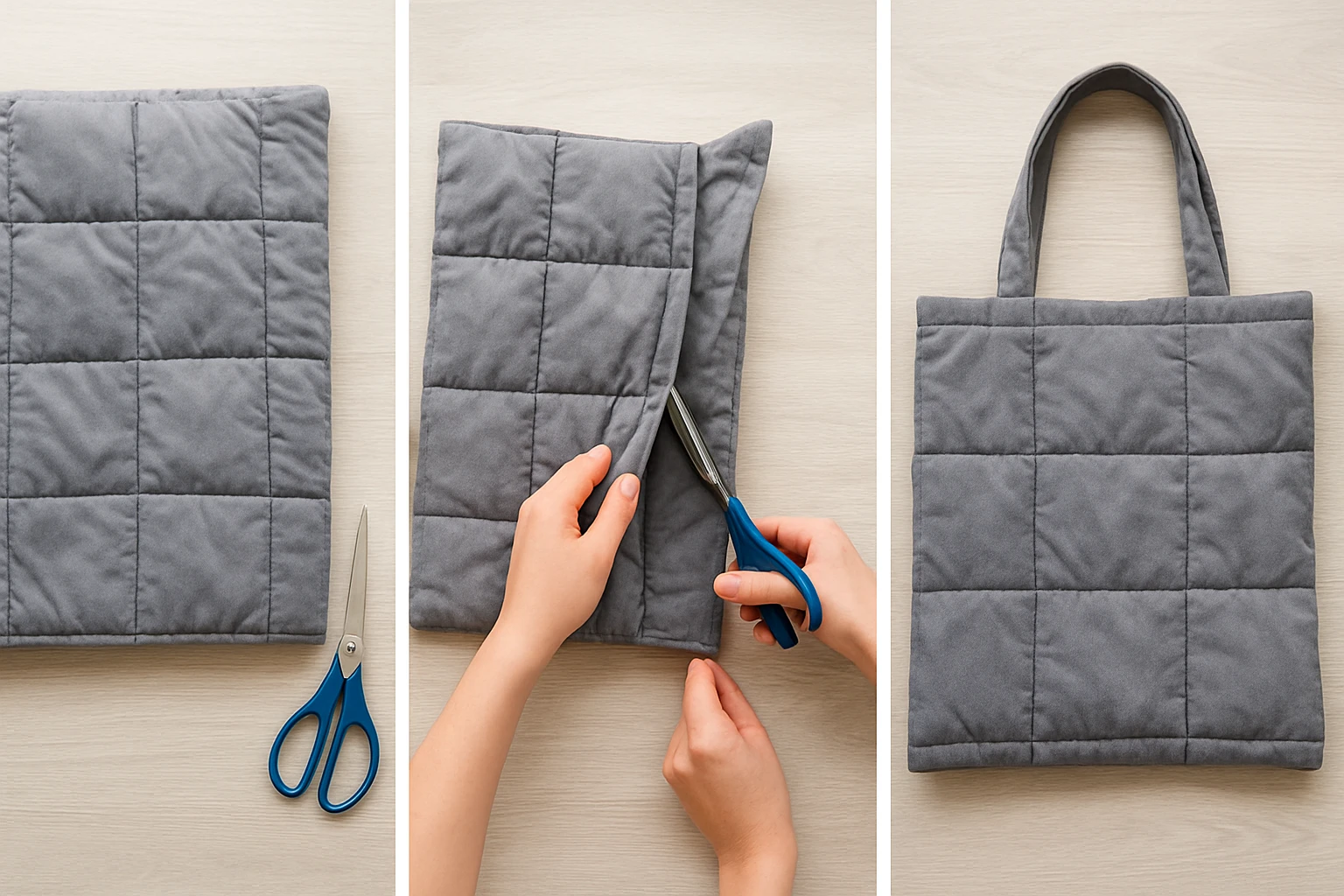
3. Sew a Reusable Grocery Bag
Measure a rectangular panel of 12 inches by 16 inches from the weighted blanket. Fold the top edge down 2 inches to create a reinforced handle. Stitch the sides and bottom, then cut two strips from the blanket to form sturdy handles.
Reinforce the handles with a layer of Bedsure Fleece Throw Blanket for added grip and comfort during heavy loads.
The resulting bag is washable, eco‑friendly, and strong enough to carry groceries up to 20 pounds.
Safety tip: Double‑stitch the handle seams to prevent them from ripping under weight.
4. Craft a Cozy Lap Blanket
Cut the blanket into a 24‑by‑30‑inch rectangle. Hem all edges to avoid fraying. For a luxurious feel, attach a border of Entisn White Minky Fabric using a straight stitch. The minky’s 3 mm pile adds a silky finish while remaining breathable.
This lap blanket is ideal for reading, working on a laptop, or keeping warm during chilly evenings.
Safety tip: Test the blanket’s weight before use; an overly heavy lap blanket may strain the user’s arms.
5. Assemble a Quilted Wall Hanging
Divide the weighted blanket into four equal panels. Arrange them in a pattern that alternates cotton and a contrasting fabric, such as Barcelonetta Blue Minky Fabric. Pin the layers together and quilt with a decorative stitching pattern.
The minky’s vibrant blue provides visual interest, while the cotton retains structural integrity. Hang the finished piece using a wooden dowel and decorative cord.
Why choose Barcelonetta minky? Its hypoallergenic fibers are safe for indoor environments, and the plush surface adds depth to the artwork.
Safety tip: Ensure that the hanging hardware can support the weight of the quilted panel.
6. Make a Reusable Hot/Cold Pack
Cut a 6‑inch square from the weighted blanket and line it with a zippered pouch made from the Bedsure Fleece Throw Blanket. Fill the pouch with rice or silica beads, then seal.
The cotton exterior prevents direct skin contact with hot or cold surfaces, reducing the risk of burns or frostbite.
Safety tip: Do not overfill the pack; it should remain flexible to conform to the body.
7. Convert to a Stroller Cover
Measure the stroller’s dimensions and cut the weighted blanket accordingly, leaving extra fabric for a zippered closure. Sew the edges and attach a zipper using a heavy‑duty needle.
Line the interior with a thin layer of KMUSET Fleece Throw Blanket to protect the child’s skin from the blanket’s weight.
This cover shields the stroller from rain, wind, and sunlight while providing a gentle, weighted sensation that can calm infants.
Safety tip: Verify that the zipper does not snag on the stroller’s frame.
8. Produce a Yoga Mat Cover
Cut a piece of the weighted blanket that matches the dimensions of a standard yoga mat (72 × 24 inches). Fold the edges inward 1 inch and stitch a hem.
Attach a strap made from Entisn White Minky Fabric for easy transport. The minky’s soft surface prevents the mat from slipping on smooth floors.
Safety tip: Ensure the cover does not obstruct the mat’s grip pattern, which could affect stability during poses.
9. Build a Fabric Storage Basket
Fold a large section of the weighted blanket into a rectangular base, then stitch vertical panels to create walls. Reinforce the bottom with a layer of Bedsure Fleece Throw Blanket to add cushioning.
The basket can store toys, magazines, or laundry. Its cotton exterior is breathable, reducing mildew risk.
Safety tip: Avoid overloading the basket; the cotton may stretch under excessive weight.
10. Design a Sensory Blanket for Children
Cut multiple strips of the weighted blanket and alternate them with strips of Barcelonetta Blue Minky Fabric. Sew the strips together in a quilted pattern to create varied textures.
The combination of cotton, fleece, and minky offers tactile stimulation that supports sensory development. Finish the edges with a soft hem to prevent fraying.
Safety tip: Ensure all seams are secure and that no small detachable parts are present, as they could pose a choking hazard.
Tips & Pro Tips
- Always pre‑wash the weighted blanket to remove any residual detergent or debris before cutting.
- Use a rotary cutter on a cutting mat for straight, precise edges, especially when working with thick cotton.
- When sewing heavy fabrics, select a longer stitch length (3–4 mm) to reduce thread breakage.
- Test the finished product for comfort and durability before regular use.
- Store unused fabric pieces in a dry, cool environment to prevent mildew.
Troubleshooting
Problem: Fabric puckers after stitching.
Solution: Use a walking foot on the sewing machine to feed the thick cotton evenly, and adjust tension settings.
Problem: Beads from the original weighted blanket leak out.
Solution: Seal any compromised pockets with fabric glue before repurposing, or remove the beads entirely.
Problem: The finished item is too heavy for its intended use.
Solution: Trim excess layers or incorporate a lighter lining fabric such as the Bedsure fleece.
Conclusion
By following these ten projects, one can extend the life of an old weighted blanket while creating useful, aesthetically pleasing items for the home. The guide emphasizes safety, proper tool selection, and thoughtful material pairing, ensuring that each upcycled piece performs reliably. Readers are encouraged to experiment with colors, patterns, and additional fabrics to personalize each project.
Repurposing not only reduces waste but also cultivates a sense of accomplishment. One can continue to explore new applications as skills improve.
Products Mentioned in This Guide
Frequently Asked Questions
What safety precautions should I take when cutting a heavy weighted blanket?
Wear cut‑resistant gloves, use a sharp fabric scissors or rotary cutter, and secure the blanket on a stable surface to prevent slipping.
Can I use a regular sewing machine for the thick fabric of a weighted blanket?
Yes, but equip it with a heavy‑duty needle (size 90/14 or 100/16) and adjust the tension and stitch length for thicker layers.
How do I ensure the upcycled item remains breathable and comfortable?
Choose natural‑fiber linings like cotton or bamboo, and avoid over‑padding by redistributing or reducing the original bead fill.
Are the recommended supplemental fabrics like fleece or minky necessary for the projects?
They aren’t required, but they add softness, insulation, and a polished finish that many users find desirable.
What is the best way to dispose of the weighted beads if I don’t want to reuse them?
Seal the beads in a sturdy bag and place them in your regular trash; many municipalities treat them as non‑hazardous bulk waste.