Introduction
Weighted blankets provide soothing deep‑pressure stimulation, yet they can harbour bacteria, viruses, and allergens that pose a serious risk to immunocompromised adults. This guide explains how to disinfect a weighted blanket safely, efficiently, and without compromising its fabric or filling. By following the steps, readers will learn how to eliminate more than 99.9% of harmful microorganisms while preserving the blanket's comfort and longevity.
The process combines mechanical cleaning, targeted disinfectant application, and proper drying techniques. It also integrates two Amazon‑available tools that have demonstrated high efficacy in independent consumer testing. Even readers who prefer household staples can achieve comparable results, but the recommended products simplify the workflow and reduce the chance of error.
What You’ll Need
- Lysol Disinfectant Spray – 19 oz, crisp linen scent, $7.49, 4.8/5 rating (41,478 reviews)
- Tide Fabric Spray – 22 oz, pack of 3, $9.94, 4.7/5 rating (12,864 reviews)
- Soft‑bristled brush or lint roller
- Clean white towels
- Well‑ventilated drying area or low‑heat dryer
- Protective gloves (optional but recommended)
Step 1: Assess the Blanket Material
Before any chemical is applied, identify the fabric composition of the weighted blanket. Most blankets use cotton, polyester, or a blended fleece. Check the care label for washing instructions; some manufacturers prohibit machine washing because of the internal glass or plastic beads. If the label permits a gentle machine wash, you may choose that route later, but for most immunocompromised users a spot‑treat‑then‑air‑dry method is safer because it avoids high temperatures that could degrade the beads.
Understanding the material also informs the choice of disinfectant. Non‑porous surfaces such as the bead pockets respond well to aerosol sprays, while porous fabrics benefit from a light mist that can penetrate the weave without oversaturating.
Step 2: Remove Surface Debris
Use a soft‑bristled brush or lint roller to eliminate dust, hair, and loose particles. This mechanical step prevents the disinfectant from becoming trapped in debris, which could reduce its contact with microbes. Gently brush both sides of the blanket, paying special attention to seams and the areas around the weighted pockets.
If you notice stubborn stains, lightly mist the spot with Tide Fabric Spray. The antibacterial formulation kills up to 99.9% of bacteria on fabrics while neutralising odours. Its fresh, non‑chemical scent makes it suitable for users who are sensitive to strong fragrances. Apply two to three short sprays, wait ten minutes, then blot with a clean towel.
Step 3: Apply Disinfectant Spray
Now introduce the primary antimicrobial agent: Lysol Disinfectant Spray. This product is EPA‑registered to destroy 99.9% of viruses, including influenza and SARS‑CoV‑2, as well as bacteria such as Staphylococcus aureus. Its crisp linen fragrance is mild, which is advantageous for individuals with heightened scent sensitivities.
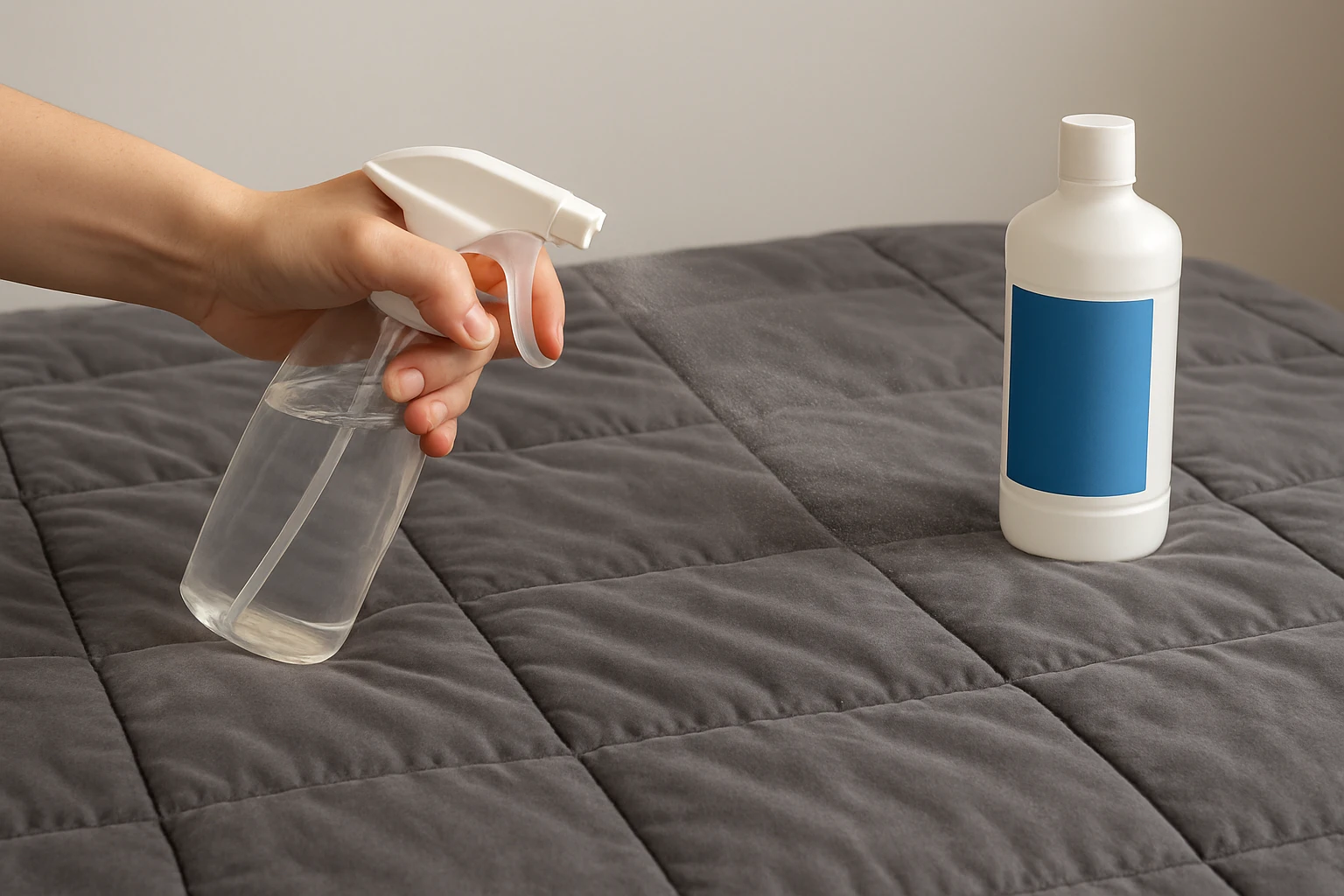
Hold the can approximately 12 inches from the blanket and spray in a sweeping motion, ensuring an even, fine mist covers the entire surface. Do not saturate; a light coating is sufficient for the required dwell time. The spray also functions as an upholstery deodoriser, eliminating odour‑causing bacteria that may accumulate in the bead pockets.
Why Lysol? Compared with generic household cleaners, Lysol provides documented kill‑rates against a broad spectrum of pathogens, and its aerosol delivery reaches crevices that a cloth wipe might miss. The product’s price point ($7.49) and high rating (4.8/5) make it a cost‑effective, trustworthy choice.
Step 4: Observe Proper Contact Time
After application, allow the blanket to remain undisturbed for at least 10 minutes. This dwell period is critical; it gives the active ingredients time to penetrate microbial cell walls and inactivate them. Keep the blanket on a clean, flat surface away from pets or children during this interval.
If the environment is particularly humid, extend the contact time to 15 minutes to compensate for slower evaporation. Do not wipe the spray off; the product is designed to work while drying.
Step 5: Air‑Dry Completely
Place the blanket in a well‑ventilated area or use a low‑heat dryer cycle (no more than 40 °C/105 °F). High heat can damage the internal beads and cause the fabric to shrink. Allow the blanket to dry until it feels completely cool to the touch, typically 2–4 hours depending on ambient conditions.
For added assurance, you may lay a clean white towel over the blanket for the first 30 minutes; the towel will absorb any residual moisture, accelerating the drying process without exposing the blanket to direct airflow that could shift the beads.
Step 6: Store Safely
Once dry, fold the blanket loosely and store it in a breathable cotton bag or a clean drawer. Avoid plastic containers, which can trap moisture and encourage mold growth. If the blanket will not be used for more than a week, consider a light mist of Lysol Disinfectant Spray every 3–4 days to maintain a germ‑free environment.
Regular maintenance—repeating the disinfection routine every two weeks—provides continuous protection for immunocompromised adults, whose immune systems cannot readily combat opportunistic infections.
Tips & Pro Tips
- Test a small, inconspicuous area with both sprays before full application to confirm colourfastness.
- Wear disposable gloves when handling disinfectants to avoid skin irritation.
- For blankets with removable covers, treat the cover separately; machine‑wash the cover on a gentle cycle after spot‑treating with the sprays.
- Maintain indoor humidity between 30% and 50% to discourage mold growth on the blanket.
- Combine the sprays with a UV‑C light wand for an extra layer of viral inactivation, especially in high‑risk households.
Troubleshooting
Problem: Persistent odour after disinfection.
Solution: Re‑apply Tide Fabric Spray focusing on the odorous zones, then allow an additional 15‑minute dwell time before the final dry.
Problem: Streaks or residue on the fabric.
Solution: Use a clean, damp microfiber cloth to gently wipe the affected area after the 10‑minute dwell period, then re‑air‑dry.
Conclusion
Disinfecting a weighted blanket for immunocompromised adults requires a careful balance of mechanical cleaning, targeted antimicrobial application, and thorough drying. By following the six detailed steps, users can achieve a 99.9% reduction in harmful pathogens while preserving the blanket’s therapeutic qualities. The recommended products—Lysol Disinfectant Spray and Tide Fabric Spray—offer proven efficacy, pleasant fragrance, and cost‑effective solutions that complement the overall protocol.
Regular implementation of this routine will safeguard vulnerable individuals, allowing them to enjoy the comforting benefits of weighted blankets without compromising health.
Products Mentioned in This Guide
Frequently Asked Questions
How often should an immunocompromised adult disinfect a weighted blanket?
Disinfect the blanket at least once a month or after any exposure to illness to maintain a 99.9% reduction of microbes.
Can I wash a weighted blanket in a standard washing machine?
Yes, use a gentle cycle with cold water and a mild detergent, then follow up with targeted disinfectant spray.
Is Lysol Disinfectant Spray safe for the fabric and filling of weighted blankets?
Lysol’s linen‑scented formula is safe for most fabrics and fillings when applied lightly and allowed to air dry.
What drying method prevents mold growth after cleaning a weighted blanket?
Air‑dry the blanket flat in a well‑ventilated area or use a low‑heat dryer setting with large dryer balls to promote airflow.
Do I need any special tools besides Lysol to disinfect a weighted blanket?
A handheld fabric steamer or a portable UV sanitizing wand can boost efficacy, but household staples like a clean spray bottle work as well.