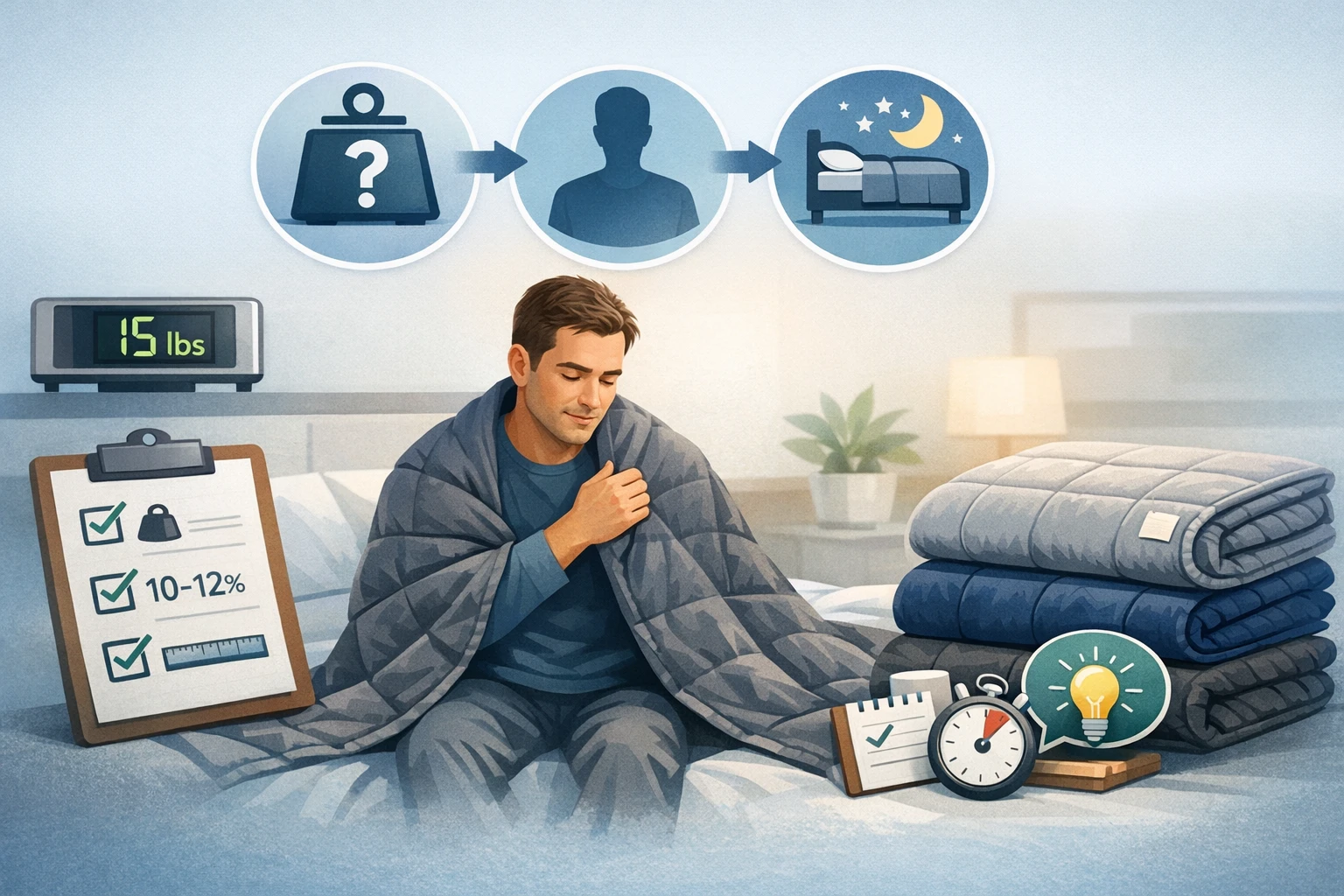
How to Choose the Right Weighted Blanket Weight for Adults with Autism — A Step‑by‑Step Guide
Introduction
One will learn how to calculate the most suitable weighted blanket weight for an adult on the autism spectrum. The guide explains why weight selection matters for sensory regulation, sleep quality, and overall well‑being. It also provides actionable steps that can be followed without purchasing any product, while offering carefully chosen tools for those who prefer a ready‑made solution. By the end of the article, one will be able to make an informed decision that balances comfort, safety, and therapeutic benefit.
What You'll Need
- A reliable scale to measure body weight.
- Pen and paper or a digital note‑taking app to record calculations.
- Access to a reputable weighted blanket, such as ALANSMA Weighted Blanket, for practical testing.
- Optional: A breathable cover or cooling fabric if temperature sensitivity is a concern.
Step 1: Determine Your Exact Body Weight
The first step requires a precise measurement of body weight using a calibrated scale. One should weigh oneself at the same time of day, preferably in the morning after using the restroom, to reduce variability. Record the weight in pounds, as most weighted blanket manufacturers base recommendations on the imperial system. If the scale provides kilograms, convert by multiplying by 2.20462.
Step 2: Apply the Recommended Weight Percentage
Clinical research and industry standards suggest that the optimal blanket weight equals 10 % of body weight, with a margin of ±2 % to accommodate personal preference. For example, an individual weighing 180 lb would aim for a blanket between 16 lb and 20 lb. One may start at the lower end of the range if sensory sensitivity is high, and gradually increase if the pressure feels insufficient.
Step 3: Consider Sensory Preferences and Climate
Adults with autism often have distinct sensory profiles; some prefer deep pressure, while others are sensitive to heat. Selecting a blanket with appropriate fabric and breathability is essential. For those who tend to overheat, a cooling material such as bamboo offers a noticeable cold‑hand feel. The ZZZhen Bamboo Weighted Blanket provides a breathable 100 % bamboo face, weighs 15 lb, costs $38.99, and holds a rating of 4.6 / 5 from 15,524 reviewers. Its cooling property makes it ideal for warm climates or individuals who experience night sweats.
Conversely, if warmth is desired, the ALANSMA Weighted Blanket features a luxury velvet surface that retains heat, is priced at $47.49, and carries a 4.6 / 5 rating from 3,293 reviews. The dual‑sided design allows one to switch between warm and cool sides depending on seasonal needs.
Step 4: Choose the Correct Size
The blanket should fully cover the torso without excessive overhang, which can cause the weight to shift during sleep. Standard adult sizes are 40" × 60" for twin, 48" × 72" for full/queen, and 60" × 80" for king. For a single adult, a full/queen size is generally sufficient. The Yescool Weighted Blanket offers a queen‑size dimension (60" × 80") with a 20 lb weight, priced at $40.99 and rated 4.5 / 5 by 9,650 reviewers. Its generous dimensions ensure full coverage for most adults while maintaining the recommended 10 % weight ratio for individuals weighing up to 210 lb.
Step 5: Test the Blanket in a Controlled Environment
Before committing to nightly use, one should test the blanket for a minimum of 30 minutes in a low‑light setting. Place the blanket on the lap while seated, and note any feelings of pressure, heat, or discomfort. If the sensation feels like a gentle hug, the weight is appropriate. If the blanket feels crushing or causes anxiety, reduce the weight by selecting a lighter model. The Degrees of Comfort Weighted Blanket includes a removable minky cover that can be detached for a lighter feel, costs $97.36, and has a 4.4 / 5 rating from 11,382 reviewers. This versatility makes it an excellent test blanket for those who are uncertain about their ideal weight.
Tips & Pro Tips
- Start with the lower end of the recommended weight range and increase gradually over weeks.
- Use a breathable duvet cover if the blanket material tends to retain heat.
- For individuals who experience anxiety during bedtime, a 7 % body‑weight blanket can provide a calming effect without overwhelming pressure.
- Consider a blanket with high stitch density (e.g., 15,000 stitches) to prevent glass‑bead leakage; the Yescool model highlights this feature.
- Maintain the blanket according to manufacturer instructions; most blankets are machine‑washable on a gentle cycle, but heavy blankets may require a commercial washer.
Troubleshooting
Problem: The blanket feels too hot during summer nights.
Solution: Switch to a bamboo‑fabric blanket such as the ZZZhen Bamboo Weighted Blanket, or add a lightweight cotton sheet on top to improve airflow.
Problem: The blanket shifts or bunches while sleeping.
Solution: Choose a blanket with tightly stitched 5" × 5" compartments, as found in the Yescool Weighted Blanket, to keep the glass beads evenly distributed.
Conclusion
One now possesses a clear, evidence‑based process for selecting the optimal weighted blanket weight for an adult with autism. By measuring body weight, applying the 10 % rule, accounting for sensory preferences, selecting the appropriate size, and testing the product, one can achieve a therapeutic deep‑pressure experience that enhances sleep quality and reduces anxiety. The recommended tools—ALANSMA Weighted Blanket, ZZZhen Bamboo Weighted Blanket, Yescool Weighted Blanket, and Degrees of Comfort Weighted Blanket—provide reliable options for a range of temperatures and weight preferences.
Products Mentioned in This Guide
Frequently Asked Questions
What is the recommended weighted blanket weight for an adult with autism?
Typically, choose a blanket that is 10% of the adult's body weight, ranging from 10 to 15 pounds for most users.
Why is the 10% rule important for sensory regulation?
A blanket weighing about 10% of body weight provides gentle deep pressure without causing strain, helping calm the nervous system.
Can I adjust the blanket weight if I have temperature sensitivity?
Yes, use a breathable cover or a cooling fabric layer to maintain comfort while keeping the same weight.
Do I need a special scale to measure my weight for this calculation?
Any reliable household scale is sufficient; just record the weight accurately before calculating the blanket size.
Is it safe to use a weighted blanket without a professional recommendation?
For most adults, following the 10% rule is safe, but consult a therapist if you have medical conditions or severe sensory issues.