Introduction
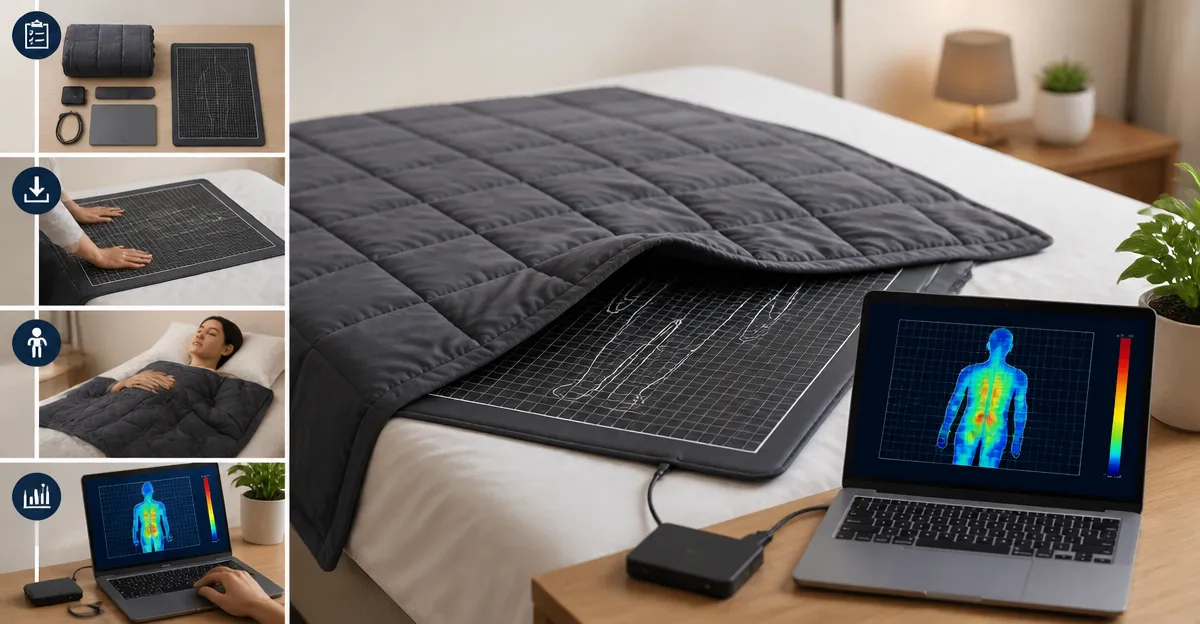
Weighted blankets are marketed as therapeutic tools that provide deep‑pressure stimulation, yet not every blanket distributes that pressure evenly. An uneven distribution can lead to hotspots, reduced comfort, and diminished therapeutic benefit. This guide teaches the reader how to perform a DIY pressure distribution test at home, interpret the results, and decide whether the blanket meets personal needs. By following the systematic approach, one can verify that the blanket’s weight is spread uniformly across the body, ensuring the promised calming effect without overheating or localized pressure.
What You'll Need
- Flat, firm surface such as a low‑pile carpet or a yoga mat
- Measuring tape or ruler (metric or imperial)
- Digital kitchen scale capable of measuring up to 30 lb
- Small flat board (e.g., a cutting board) to act as a pressure plate
- Pen and notebook for recording measurements
- Optional: a lightweight duvet cover to protect the blanket during testing
For demonstration, the guide will reference a few popular weighted blankets that are readily available on Amazon. These products are not required, but they serve as reliable examples of tools that can be used during the test.
Step 1: Prepare the Test Surface
Begin by clearing a space of at least 3 ft by 3 ft on a flat floor. Lay the yoga mat or low‑pile carpet to provide a non‑slipping base. The surface should be level; any incline will distort pressure readings. Place the small flat board in the center of the surface; this board will act as a pressure plate on which the scale will sit.
If you own the Topcee Weighted Blanket, you can use it as the test subject because its 20 lb weight and queen size are representative of many consumer models. The blanket’s micro‑fiber material and glass‑bead filling provide a realistic scenario for pressure distribution.
Step 2: Measure Blanket Dimensions
Using the measuring tape, record the length and width of the blanket. For the Topcee model, the dimensions are 60" × 80" (queen size). Note that weighted blankets are intentionally smaller than standard blankets to concentrate weight on the body; this design feature should be reflected in your measurements. Write the dimensions in the notebook along with the blanket’s total weight (20 lb for Topcee, 20 lb for yescool Weighted Blanket, etc.).
Accurate dimensions are essential because the pressure (force per unit area) is calculated by dividing the blanket’s weight by the surface area that contacts the body.
Step 3: Determine Weight Distribution Zones
Divide the blanket into a grid of equal zones. A common approach is a 4 × 4 grid, creating sixteen 15" × 20" zones for a queen‑size blanket. Mark the grid lightly with a washable fabric marker or use a piece of masking tape to outline each zone. The purpose of the grid is to isolate sections of the blanket so that pressure can be measured independently.
Products such as the YnM Weighted Blanket feature 2" × 2" compartments, which naturally create a fine‑grained pressure map. When testing a blanket with such compartmentalization, you may increase the grid resolution to 8 × 8 to capture the effect of the small squares.
Step 4: Use a Scale to Test Pressure Points
Place the digital kitchen scale on the flat board. Zero the scale so that it reads 0 lb with only the board present. Next, lay a single zone of the blanket over the board, ensuring that the edges of the zone are flush with the board’s edges. Record the weight reading; this represents the force exerted by that zone.
Repeat the measurement for each zone, recording all sixteen values. For a well‑designed blanket, the readings should vary by no more than 5 % of the average zone weight. Significant deviations indicate uneven bead distribution or stitching inconsistencies.
The Kivik Weighted Blanket advertises a 7‑layer design that claims to keep beads evenly placed; comparing its zone readings to those of the Topcee model will illustrate the practical impact of such construction.
Step 5: Record and Analyze Data
After completing all zone measurements, calculate the average zone weight by summing the sixteen readings and dividing by sixteen. Then compute the percentage variance for each zone: ((zone weight − average) / average) × 100. Create a simple table in your notebook or spreadsheet to visualize the data. Zones with variance greater than ±5 % merit further inspection.
If you own the RJOP Weighted Blanket, you may notice that its 7‑layer construction and eight built‑in loops help maintain consistent pressure across zones, as reflected by lower variance percentages.
Step 6: Interpret Results and Adjust
When the variance falls within the acceptable range, the blanket is confirmed to provide uniform deep‑pressure stimulation. If certain zones are consistently heavier, the likely cause is bead migration or stitching gaps. In such cases, consider the following actions:
- Gently shake the blanket to redistribute beads.
- Use a duvet cover with loops (as provided on the YnM Weighted Blanket) to keep the blanket taut and reduce bead movement.
- Contact the manufacturer if the variance exceeds 10 % after multiple adjustments.
Remember that temperature can affect perceived pressure; a cooling blanket such as the yescool Weighted Blanket may feel lighter on a hot night because the breathable fabric reduces heat buildup.
Tips & Pro Tips
- Test in a neutral climate. Extreme heat or cold can cause fabric to expand or contract, skewing measurements.
- Use a consistent hand pressure. When laying each zone, press gently to remove air pockets without compressing the beads.
- Document the date and ambient temperature. This information helps track long‑term changes in bead distribution.
- Rotate the blanket. After each full testing cycle, rotate the blanket 180° and repeat; this ensures that any systematic bias in the scale or board is eliminated.
- Consider a professional assessment. For therapeutic use (e.g., anxiety, ADHD), a clinician may request a certified pressure‑mapping report.
Troubleshooting
| Problem | Possible Cause | Solution |
|---|---|---|
| Zone weight varies >10 % | Bead leakage or uneven stitching | Inspect seams; if beads are visible, contact seller for replacement. |
| Scale reads inconsistent values | Uneven board surface or scale drift | Calibrate scale on a hard, flat surface before each session. |
| Blanket feels hot despite low variance | Fabric not breathable | Consider a cooling model such as the yescool Weighted Blanket, which uses moisture‑wicking fibers. |
Conclusion
Performing a DIY pressure distribution test empowers the consumer to verify that a weighted blanket delivers consistent, therapeutic pressure across the body. By preparing a level surface, measuring dimensions, creating a zone grid, and using a simple scale, one can obtain quantitative data that informs purchase decisions and long‑term usage. The guide also highlighted how specific product designs—such as the 7‑layer construction of the Kivik Weighted Blanket or the fine compartments of the YnM Weighted Blanket—affect pressure uniformity. Armed with this knowledge, readers can select the most suitable blanket for their comfort and therapeutic needs.
Products Mentioned in This Guide
Frequently Asked Questions
How do I perform a DIY pressure distribution test on a weighted blanket?
Place the blanket on a flat surface, use a small board as a pressure plate, and weigh each section with a digital kitchen scale, recording the readings.
What tools are required for the pressure distribution test?
You need a firm surface, measuring tape, a digital kitchen scale (up to 30 lb), a flat board, and a pen or notebook for notes.
How can I tell if my weighted blanket has uneven pressure distribution?
If the scale readings vary significantly across different sections, the blanket is creating hotspots and not distributing weight evenly.
Will using a lightweight duvet cover affect the accuracy of the test?
A thin duvet cover can protect the blanket and has minimal impact on weight measurements, so it’s generally fine to use.
How often should I re‑check my weighted blanket’s pressure distribution?
Re‑test after washing, after a few months of use, or if you notice changes in comfort or effectiveness.